
Last updated September 23, 2026
Free visual inspection and a written scope of work before any mitigation begins - photos, moisture readings, and drying logs go in your claim file
The scope we write is the scope we bill. Anything new gets shown to you, in writing, before we touch it.
 Before
 After
After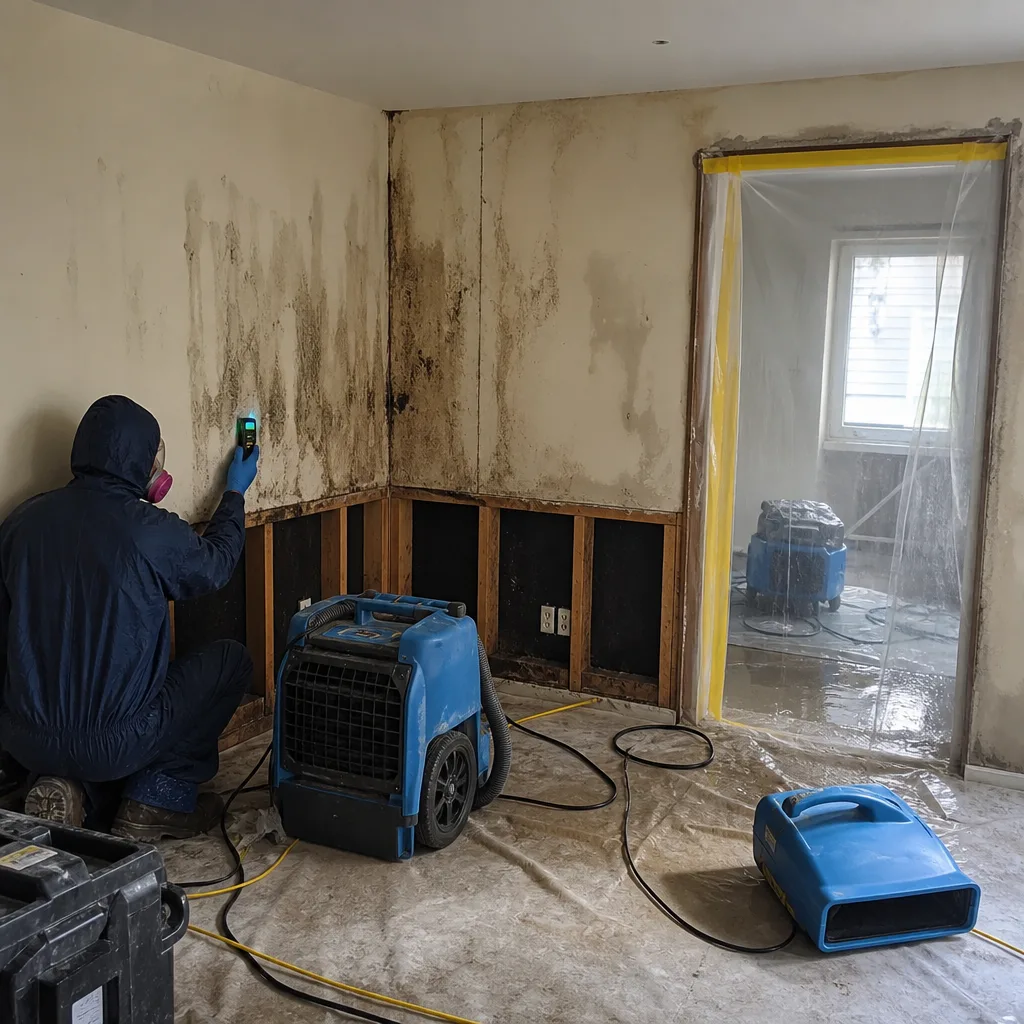 Before
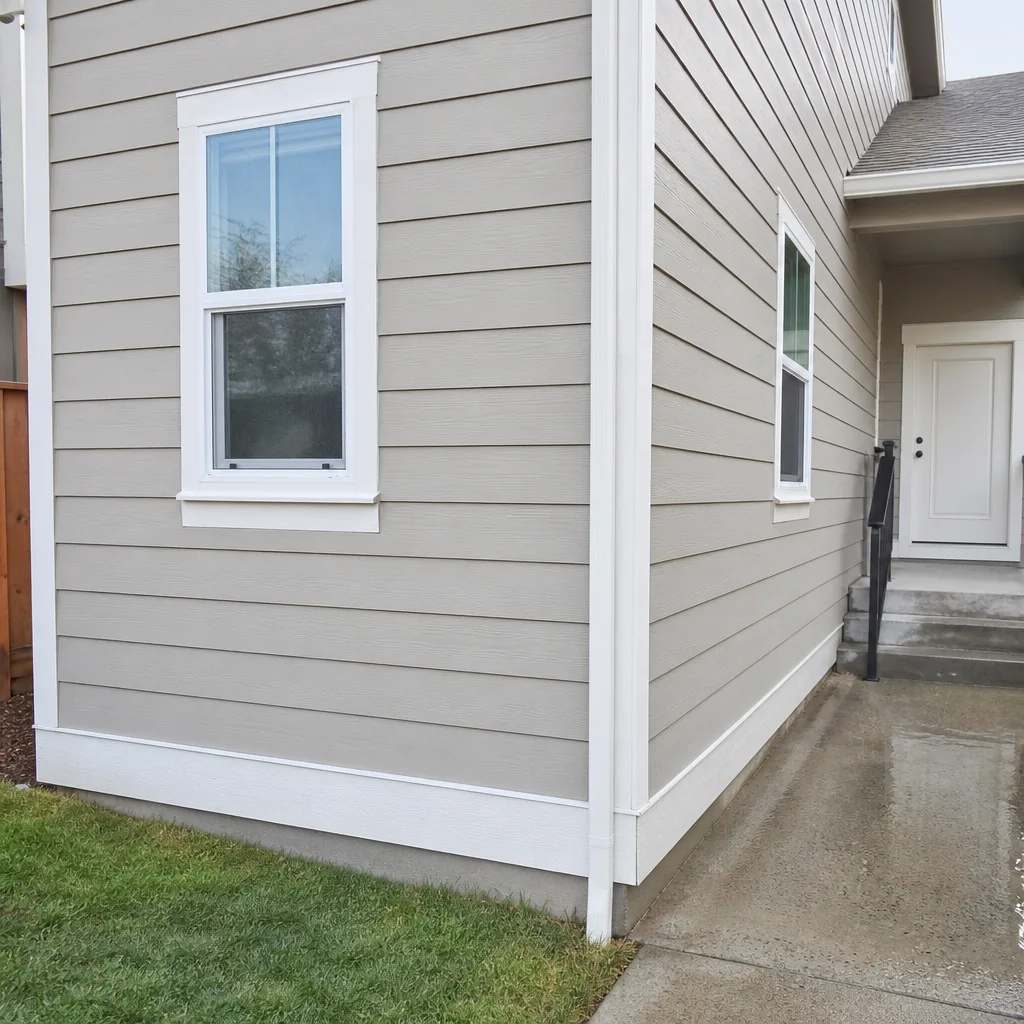 After
After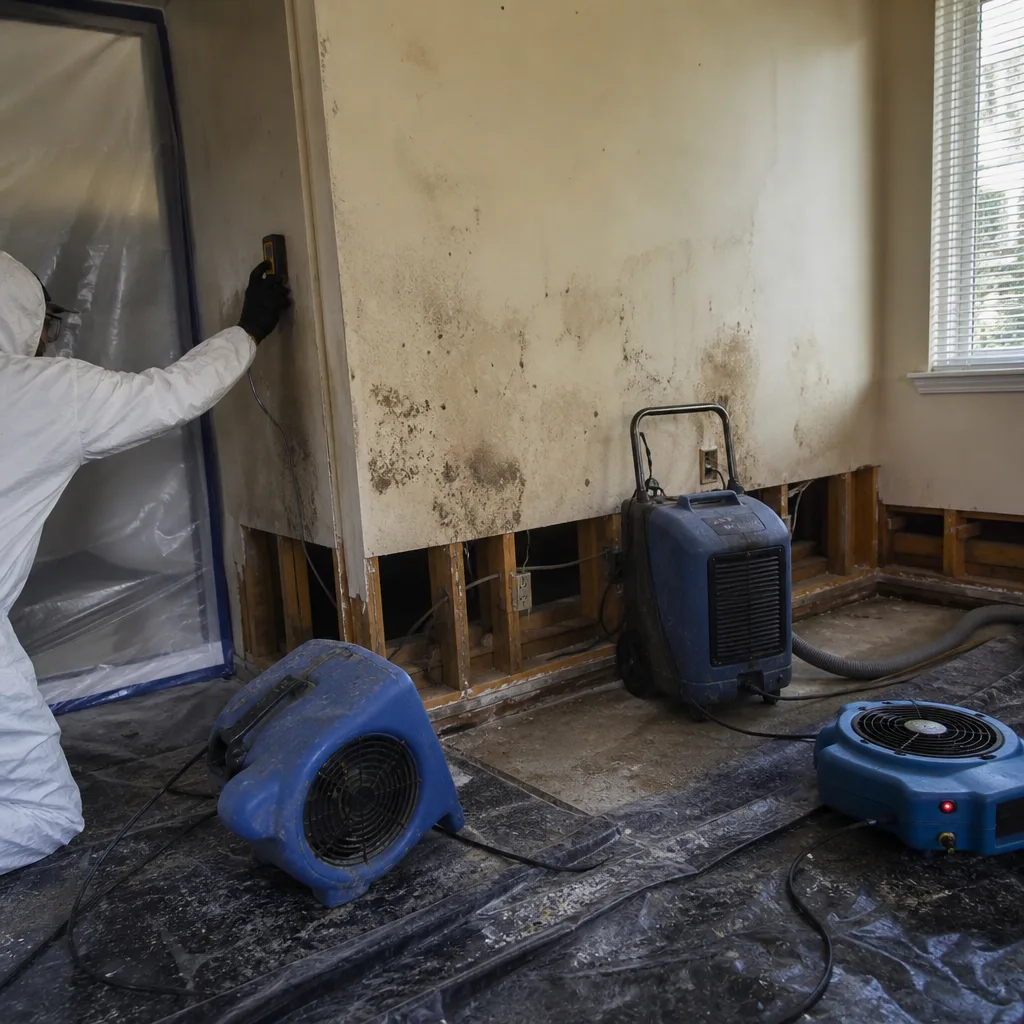 Before
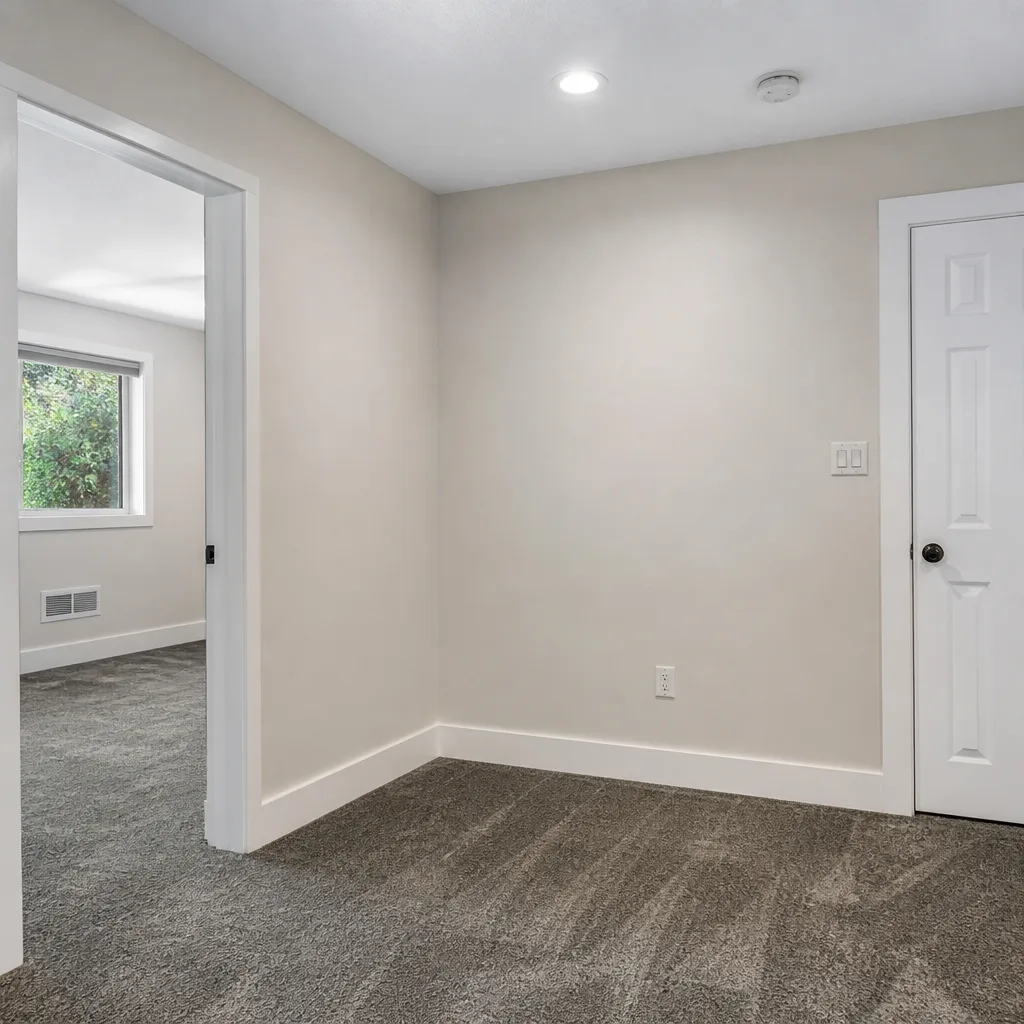 After
AfterDIY vs Professional Damage Restoration: The Federal Way Homeowner’s Decision Guide
A Federal Way homeowner who rents a shop vac and dries a flooded basement over a weekend may have done competent work. But without initial moisture readings and a drying log, their insurer has grounds to argue the damage was minor and self-resolved, and the claim may pay pennies on the dollar. Since 2011, we’ve reviewed hundreds of claims where DIY efforts, however well-intentioned, collapsed the documentation chain that makes restoration invoices payable. This guide draws the decision line at the point where DIY action creates claim risk, not where it becomes physically difficult. You’ll learn which damage scenarios allow safe homeowner action, what documentation protects you regardless of your choice, and when professional intervention becomes a financial necessity rather than a convenience. For more guidance on selecting the right contractor, see our step-by-step resource.
Quick Answer
DIY damage restoration is defensible in Federal Way only for Category 1 clean water losses under 10 square feet with no wall cavity involvement, provided you document moisture baselines, ambient humidity, and timestamped photos before touching anything. For Category 2 or 3 water, mold exceeding 10 square feet, fire or smoke damage, or any loss where insurance coverage is likely, professional restoration protects both the physical structure and the documentation required for claim payment. The real cost comparison is not contractor invoice versus zero, but contractor invoice versus the settlement reduction from an undocumented DIY attempt on a claim worth $15,000-$40,000.
Table of Contents
- Where DIY Is Defensible (And Where It Destroys Your Claim)
- Documentation You Must Create Before Touching Anything
- How Federal Way’s Climate Changes the Math
- Washington State Mold Remediation Rules Every Homeowner Should Know
- The Real Cost Comparison: Invoice vs. Settlement Reduction
- A Measurable Decision Tree for Federal Way Homeowners
- Professional Equipment vs. Rental Store Reality
- What Insurers Actually Require for Claim Payment
 Before
 After
AfterWhere DIY Is Defensible (And Where It Destroys Your Claim)
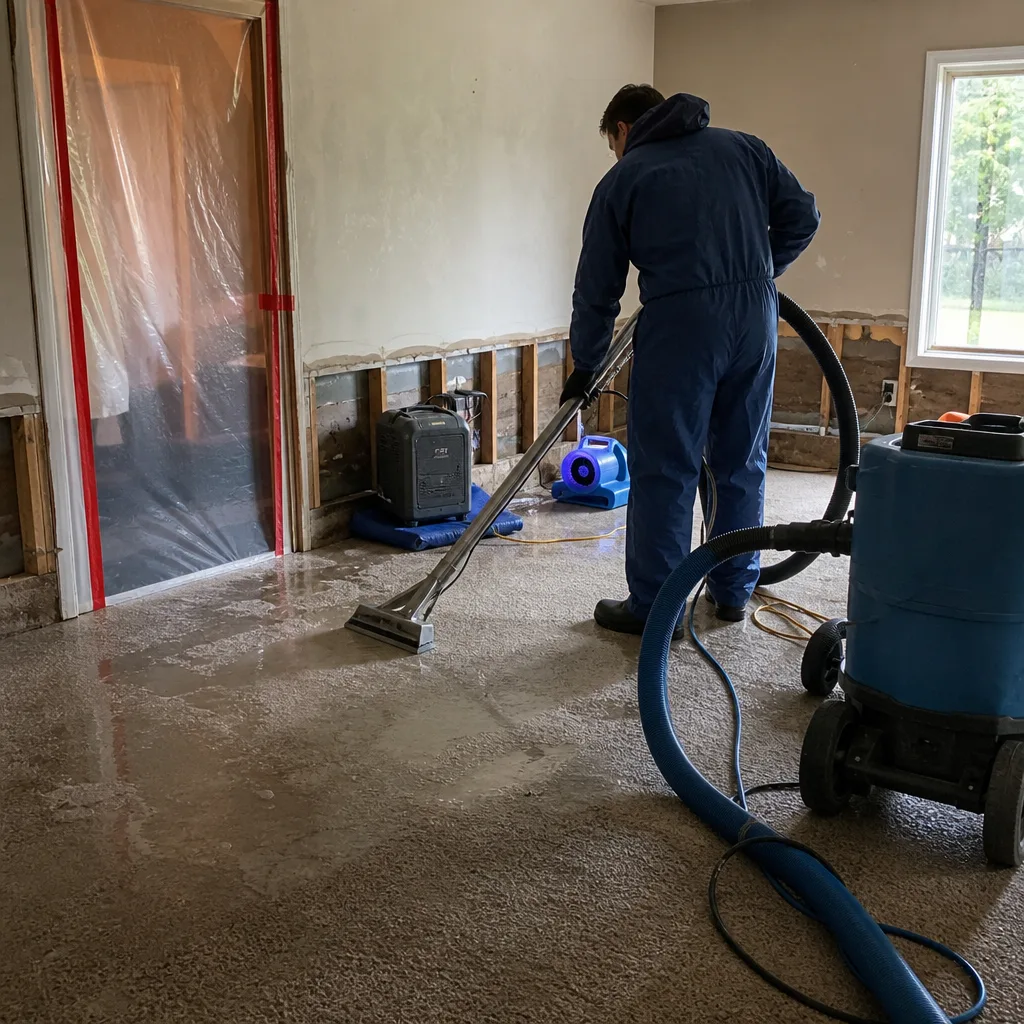
The restoration industry classifies water damage by category, and this classification determines whether DIY action is legally and financially safe. Category 1 water originates from a sanitary source: broken supply lines, tub or sink overflows with no contaminants, or melting ice or snow. Category 2 contains significant contamination, such as dishwasher discharge or washing machine overflow. Category 3 is grossly contaminated, including sewage backup or floodwater from the Puyallup River or Puget Sound surge.
DIY is defensible only for Category 1 losses meeting all of these conditions:
- Affected area is under 10 contiguous square feet of flooring
- No water has wicked into wall cavities, baseboards, or insulation
- Source is stopped and will not recur
- Loss occurred within the last 24 hours
- Subfloor is concrete or tile, not hardwood or engineered flooring
- No HVAC system has been affected
Exceed any of these thresholds and DIY creates documentation gaps that insurers exploit. In our experience at DryMark Restoration Federal Way home, the most common error is a homeowner extracting visible water from carpet pad while leaving the subfloor at 80% moisture content. Six weeks later, mold appears. The insurer denies the mold claim because no baseline moisture reading proves the subfloor was wet at the time of loss.
Category 2 and 3 water requires professional handling under IICRC S500 standards. Category 2 degrades to Category 3 within 48 hours if not properly dried. In Federal Way’s marine climate, that window often shrinks to 36 hours during our wet season from October through April-making seasonal damage restoration care essential for local homeowners. The Puget Sound’s high ambient humidity slows evaporation, meaning water that would dry naturally in Phoenix in 48 hours may remain trapped in Federal Way structures for a week.
Fire and smoke damage has no DIY defensible category. Smoke residues are acidic and begin etching finishes within hours. Protein fires from kitchen incidents leave nearly invisible residues that require thermal fogging or hydroxyl generation. A homeowner wiping soot with household cleaners typically drives residues deeper into porous surfaces and creates secondary damage that insurers classify as owner-caused.
Documentation You Must Create Before Touching Anything
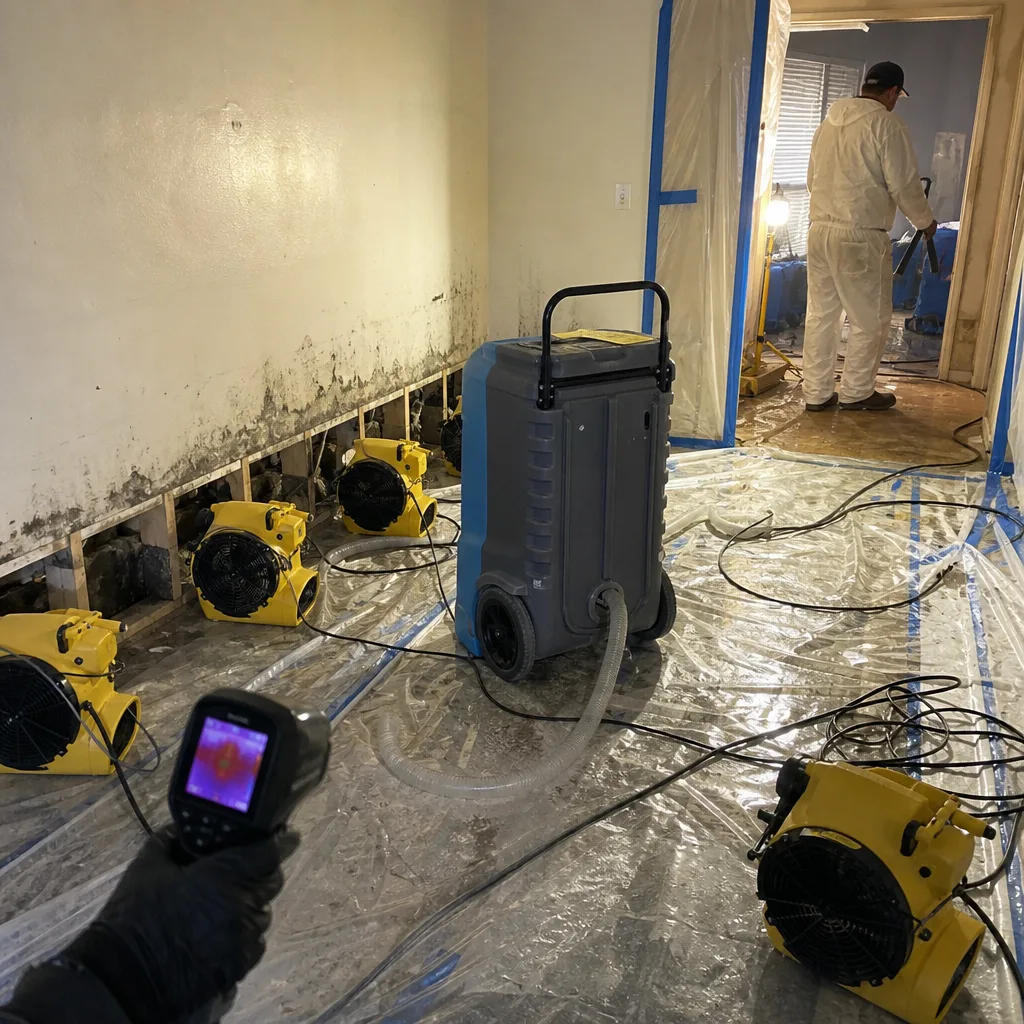
Whether you proceed DIY or call a contractor, create this documentation before any water is extracted or any material is moved. This is the documentation chain that makes claims payable. Our water damage restoration maintenance checklist outlines what Federal Way homeowners should track.
- Timestamped photographs of the source and all affected areas. Include wide shots showing room context and close-ups of water lines on walls, saturated materials, and the point of origin. Photograph serial numbers on affected appliances. Store these in cloud backup immediately; phones fail, and water-damaged phones fail faster.
- Record ambient relative humidity and temperature. A $25 hygrometer from any Federal Way hardware store is sufficient. Write down the reading, the exact time, and the room location. Psychrometric data, which is the study of air moisture and temperature relationships, determines how much moisture the air can hold and therefore how fast materials will dry. Without this baseline, no one can prove conditions were or were not conducive to microbial growth.
- Written description of the water source, including when it started and when it was discovered. Note any attempts to stop the source. This becomes your sworn statement if the claim is disputed.
- Measure and record affected square footage by material type. “Wet carpet in basement” is insufficient. “12 square feet of 40-ounce nylon carpet over rebond pad on concrete slab, water extending 3 inches up drywall in southeast corner” is a document an adjuster can work with.
- Contact your insurer before beginning work, and record the claim number, representative name, and time of call. Ask specifically whether they require a certified restoration contractor for documentation purposes. Many policies now include this requirement in endorsements that homeowners do not read.
We provide this documentation package as standard on every Water Damage Restoration in Federal Way job, along with daily moisture logs showing progressive drying to IICRC S500 standards. A homeowner who lacks these records is negotiating their settlement with one hand tied.
One additional step specific to Federal Way: photograph your property’s exterior drainage configuration. Homes in the Westway, Adelaide, and Lakeland neighborhoods frequently experience groundwater intrusion due to our clay-heavy soils and the slope dynamics between I-5 and Puget Sound. Documenting that your sump pump was functional and your downspouts were clear establishes that the loss was sudden and accidental, not gradual and excluded.
How Federal Way’s Climate Changes the Math
Federal Way’s location on the eastern shore of Puget Sound creates restoration conditions that differ substantially from inland Washington markets like Spokane or Yakima. Our annual precipitation averages 39 inches, concentrated October through April, with January relative humidity frequently exceeding 85%.
These conditions matter for DIY decisions in specific ways:
- Evaporation rates are roughly 40% lower than the national average during winter months. A carpet that feels dry to the touch may retain 60% moisture content in the pad, well above the 16% threshold that supports mold growth. Homeowners relying on feel rather than moisture meters make this error repeatedly.
- Our marine layer in spring and early summer maintains high humidity even when precipitation is low. Natural ventilation, opening windows to “let the house breathe,” often introduces more moisture than it removes during May and June.
- Homes in the Dash Point and Marine Hills areas, closer to the water, experience more frequent condensation events. Cold water supply lines in crawl spaces sweat when warm, humid air contacts them. Homeowners mistake this for active leaks and either undertake unnecessary demolition or ignore genuine problems.
- The freeze-thaw cycle in Federal Way is milder than eastern Washington but more frequent. Pipes in exterior walls of older homes in the original Federal Way core, built 1960s-1980s, experience stress from repeated minor expansion. Pinhole leaks develop slowly, and by the time visible damage appears, cavities have been wet for weeks.
In our experience, Federal Way homeowners who attempt DIY drying in November through February without dehumidification equipment achieve complete drying in fewer than 5% of cases. The ambient air simply cannot accept additional moisture. Professional-grade dehumidifiers, such as the Dri-Eaz and Phoenix systems we deploy, remove 30-50 gallons of moisture daily by creating vapor pressure differentials, essentially forcing moisture out of materials into the air, then extracting it. Rental store dehumidifiers typically manage 8-12 gallons under optimal conditions, and optimal conditions do not occur in Federal Way basements in January.
Washington State Mold Remediation Rules Every Homeowner Should Know
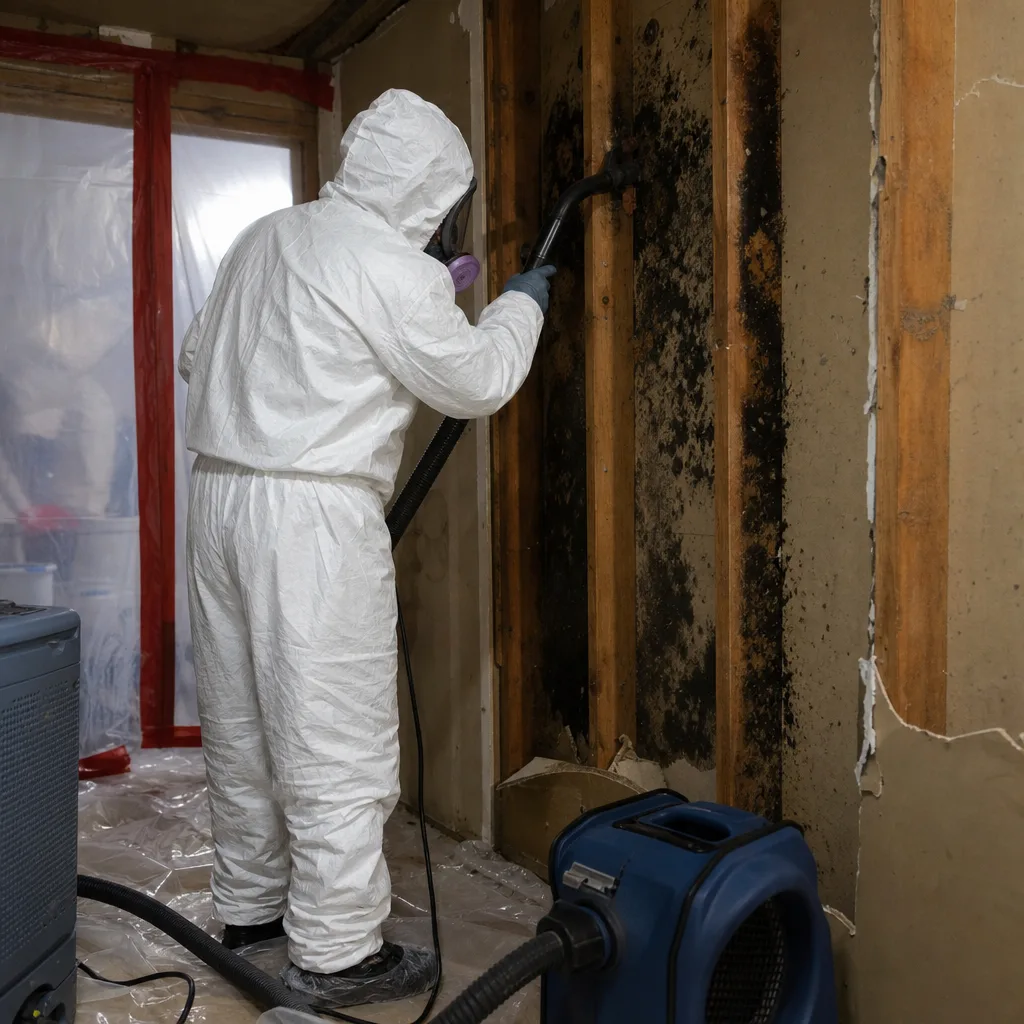
Washington does not license mold remediation contractors at the state level, which creates confusion about who may perform this work. However, the regulatory gap is narrower than it appears. The Washington State Department of Labor and Industries enforces worker protection standards under WAC 296-62-145 that require specific containment and respiratory protection for mold disturbance exceeding 10 square feet. IICRC S520, the industry standard for mold remediation, recommends professional remediation for any visible mold growth exceeding that threshold.
More critically for homeowners, insurance policies increasingly exclude mold damage resulting from DIY remediation attempts. The standard ISO HO-3 policy form excludes mold unless it results from a covered peril, and many insurers add endorsements that exclude mold entirely or limit coverage to $10,000. When mold appears after a homeowner’s DIY water extraction, the insurer’s position is often that the mold resulted from improper drying, a maintenance issue, not from the original water loss.
We address this routinely in Mold Remediation in Federal Way. The documentation we create, including initial moisture readings, daily drying logs, and final clearance testing, establishes a chain of causation that connects any subsequent mold to the original loss, not to negligent drying.
For Federal Way homeowners specifically, our wet climate means mold growth begins within 48-72 hours of water intrusion in most structures. In summer months, when attic temperatures exceed 120°F, that window compresses further. A homeowner who extracts water on Saturday but does not confirm structural drying until Monday has likely already initiated mold colonization in wall cavities.
The 10 square foot threshold is not arbitrary. At that size, disturbance without containment releases sufficient spore concentration to contaminate adjacent spaces through HVAC systems. We’ve documented cross-contamination in Federal Way homes where a homeowner removed a 12 square foot section of moldy drywall in a basement bathroom without isolating the return air vent, spreading spores to three upper floors. The original mold claim was potentially covered; the resulting whole-house remediation was not.
The Real Cost Comparison: Invoice vs. Settlement Reduction
The conventional DIY cost comparison, rental equipment and supplies versus professional invoice, is the wrong calculation. The correct comparison is professional invoice versus the settlement reduction that follows undocumented DIY work.
Consider a typical Federal Way scenario: a dishwasher supply line fails while the homeowner is at work, flooding the kitchen and adjacent laundry room over six hours. Visible damage includes 80 square feet of vinyl flooring, baseboards, and lower cabinet kick plates. The homeowner rents a wet/dry vacuum and two fans, extracts visible water, and runs fans for three days. Surface materials appear dry.
Three months later, the subfloor registers 28% moisture content (dry standard: 12%), mold appears behind the refrigerator, and the hardwood in the dining room has cupped from moisture migration. The homeowner files a claim.
The insurer’s response, in our experience with similar cases:
- The original loss was Category 1 clean water, properly addressed by the homeowner’s prompt action
- No documentation establishes that the subfloor was wet at the time of loss
- The mold and hardwood damage represent separate, gradual losses excluded under the policy
- Settlement offer: $1,200 for replacement of visibly damaged vinyl and baseboards
Professional restoration for the original loss would have cost $4,500-$6,800, including moisture mapping, subfloor drying with Injectidry panel systems, and documentation. The actual loss, now including mold remediation, subfloor replacement, and hardwood repair, exceeds $22,000. The homeowner’s net position: $20,800 worse than if they had never touched the water.
This is not an insurer acting in bad faith. It is an insurer applying policy language to incomplete documentation. The homeowner’s DIY action, however reasonable, destroyed the evidence of loss extent.
Our Haven Standard, Clause 1, requires a written price before work begins specifically so homeowners can make this comparison with accurate numbers. We provide free estimates in Federal Way; the comparison should be made with real figures, not assumptions.
A Measurable Decision Tree for Federal Way Homeowners
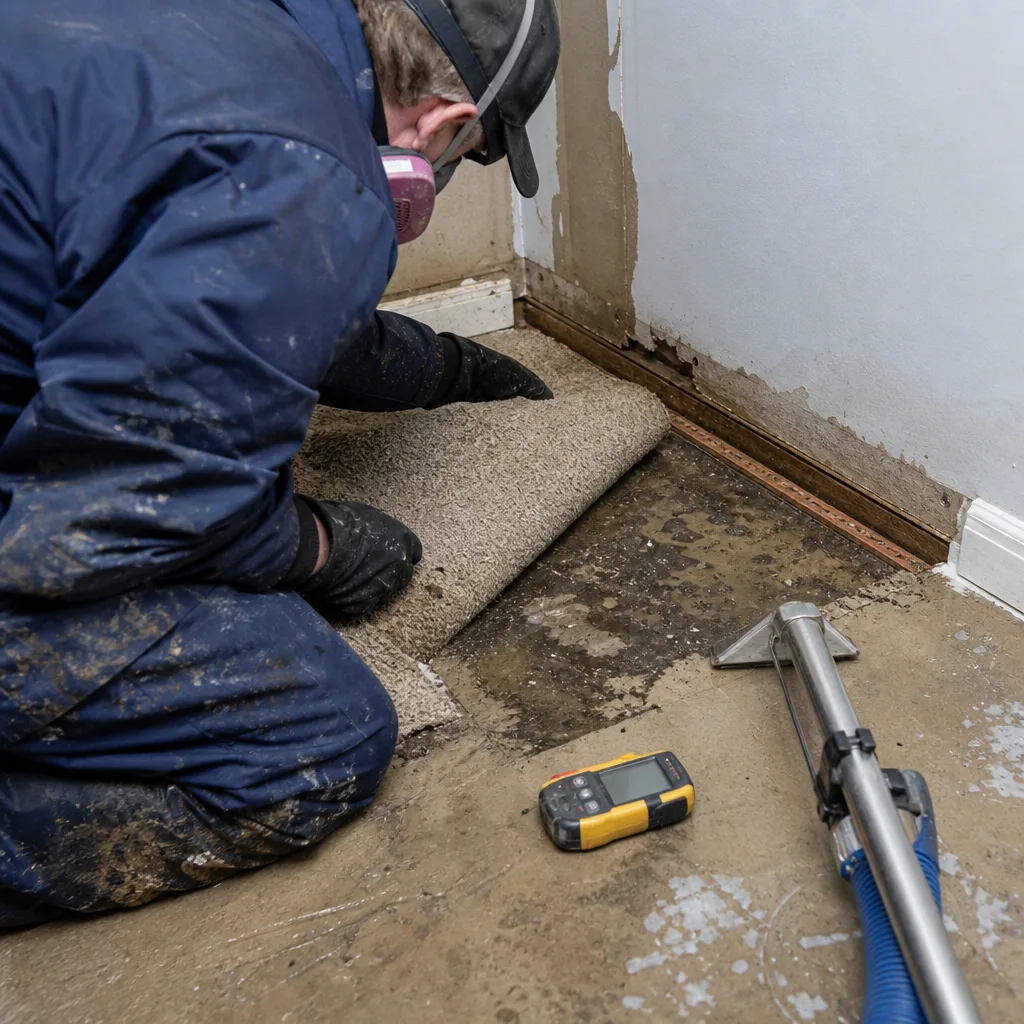
Use these measurable conditions, not your confidence level or budget pressure, to determine your course of action.
Proceed with DIY only if ALL conditions are met:
- Water is Category 1 (clean, sanitary source)
- Affected area is under 10 contiguous square feet
- No water has entered wall cavities, baseboard channels, or insulation
- Loss discovered within 24 hours of occurrence
- Ambient relative humidity is under 60% (check your hygrometer)
- You can complete documentation (photos, measurements, written description) before extracting water
- You have access to a moisture meter to confirm structural materials reach dry standard
- No insurance claim is anticipated
Call a professional if ANY condition applies:
- Water category is unknown or potentially Category 2 or 3
- Affected area exceeds 10 square feet or water has entered wall cavities
- More than 24 hours has elapsed since loss occurrence
- Any mold is visible, regardless of area
- Loss involves fire, smoke, or sewage
- Insurance coverage is likely to be sought
- The structure is older than 1980 and may contain asbestos-containing materials (common in Federal Way’s original construction stock)
- You cannot verify dry standard with a moisture meter
For losses in the intermediate zone, where conditions are borderline, we offer free second opinions on any competitor’s written estimate. Bring documentation of your situation and we will review it without charge.
Professional Equipment vs. Rental Store Reality
The equipment gap between professional restoration and rental store availability is wider than most homeowners recognize. This matters because ineffective equipment creates a false sense of security: the homeowner believes drying is complete when moisture has simply migrated to inaccessible areas.
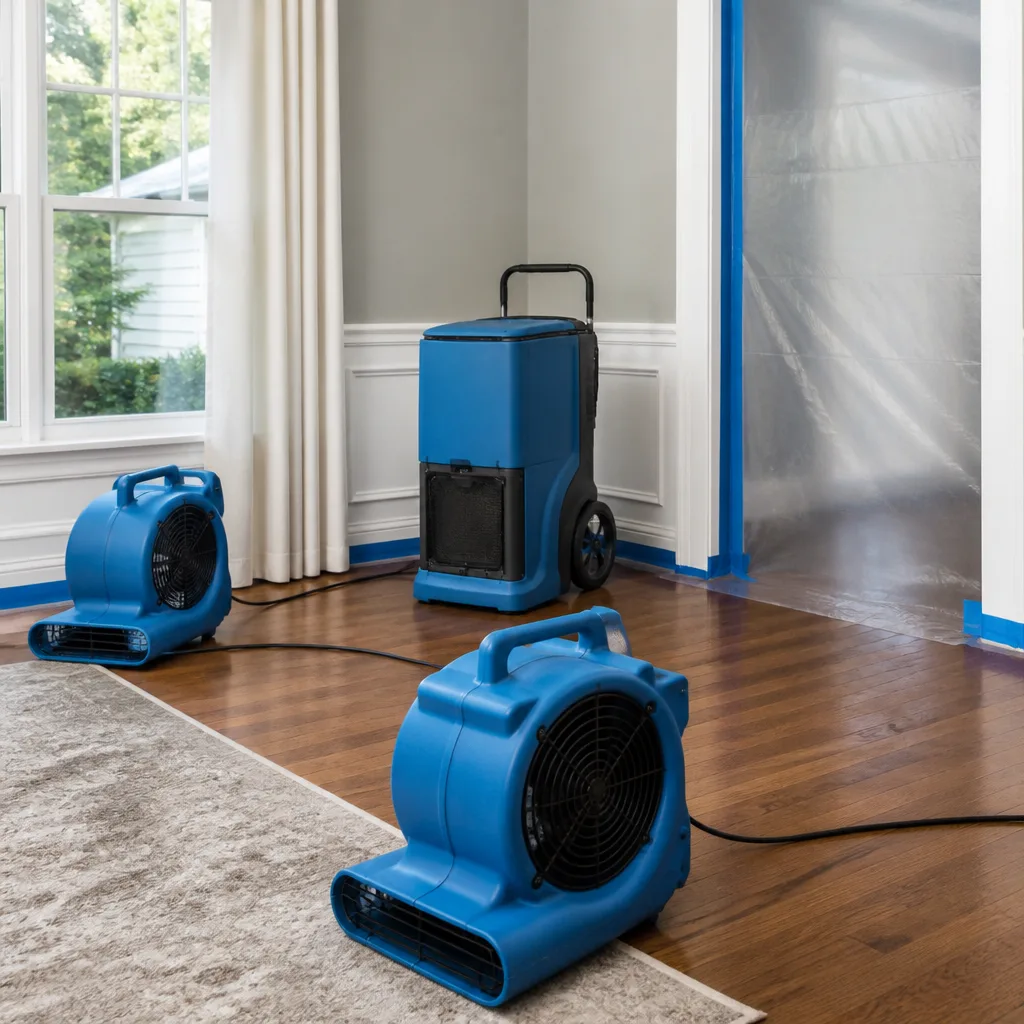
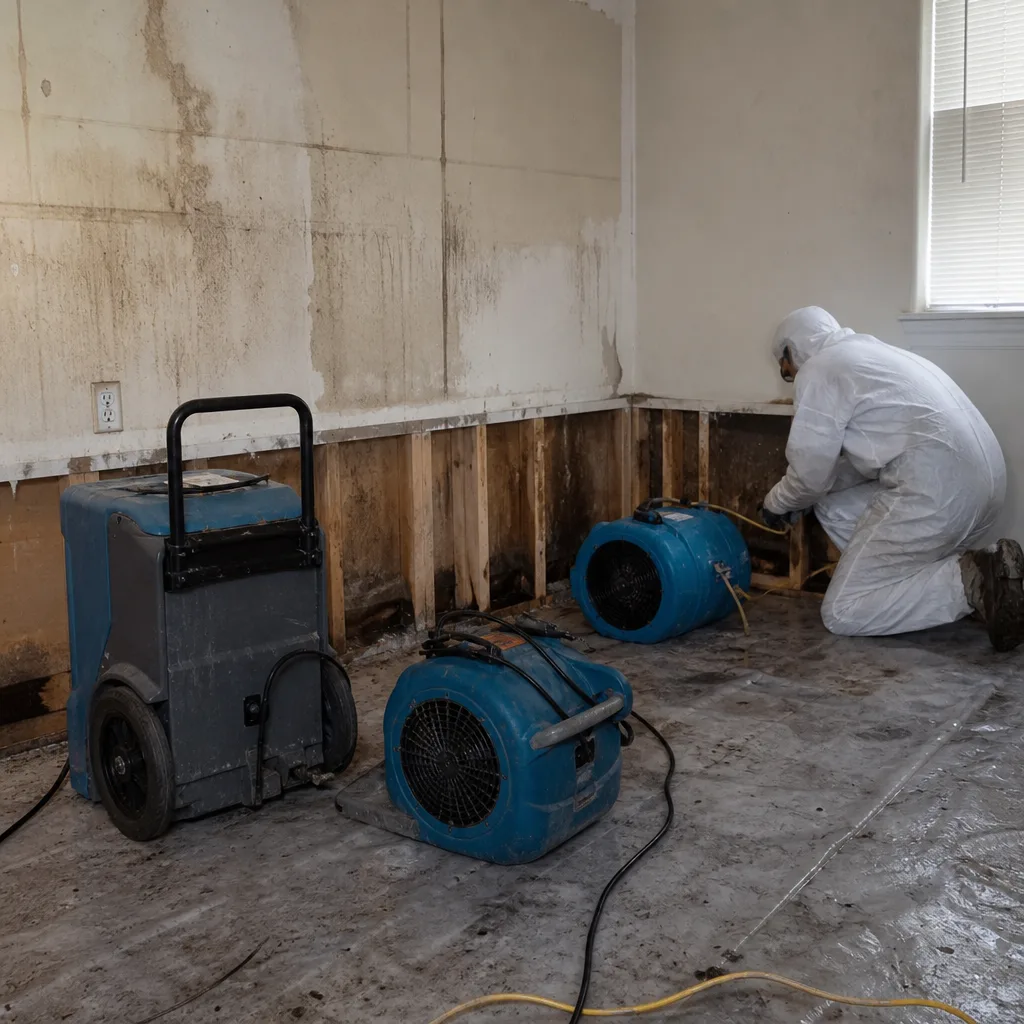
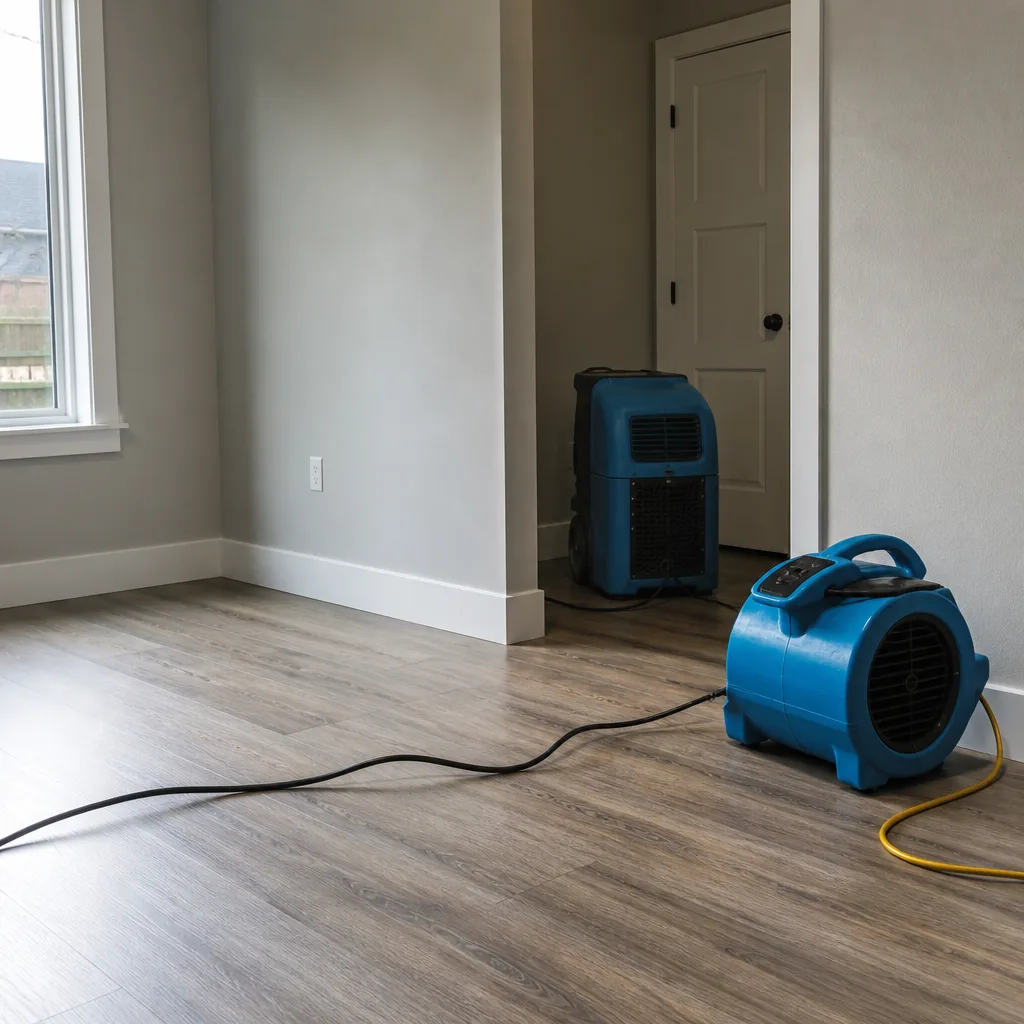
Professional air movers, such as the B-Air and XPOWER units we deploy, generate 2,000-3,000 CFM (cubic feet per minute) at velocities designed to create laminar airflow across wet surfaces. Rental store fans typically produce 500-1,000 CFM with turbulent dispersion that does not effectively drive evaporation. The professional units also operate at multiple angles, including horizontal drying of walls and cabinets, while rental units are floor-only.
Dehumidification is where the gap becomes critical. Low-grain refrigerant (LGR) dehumidifiers, standard in professional restoration, remove moisture to dew points below 40°F, enabling them to extract water even in cool, humid conditions like Federal Way basements in December. Rental store dehumidifiers are conventional refrigerant units that become ineffective below 65°F and cannot achieve the specific humidity levels required for structural drying.
Injectidry systems, which we use for hardwood floor drying and wall cavity injection, create negative pressure within building assemblies to extract moisture from the inside out. No rental equivalent exists. A homeowner with cupping hardwood who places fans on the surface drives moisture deeper into the boards, permanently damaging them.
Detection equipment completes the documentation chain. Thermal imaging cameras reveal moisture patterns invisible to visual inspection. Pinless and pin-type moisture meters quantify moisture content in specific materials against established dry standards. Hygrometers with data logging capability create the continuous record that insurers require for claim validation.
The rental store’s $80/day package is designed for surface drying after minor spills. It is not designed for structural drying after water intrusion. Using it for the latter is like treating a fracture with an adhesive bandage: the visible symptom is addressed while the underlying condition worsens.
What Insurers Actually Require for Claim Payment
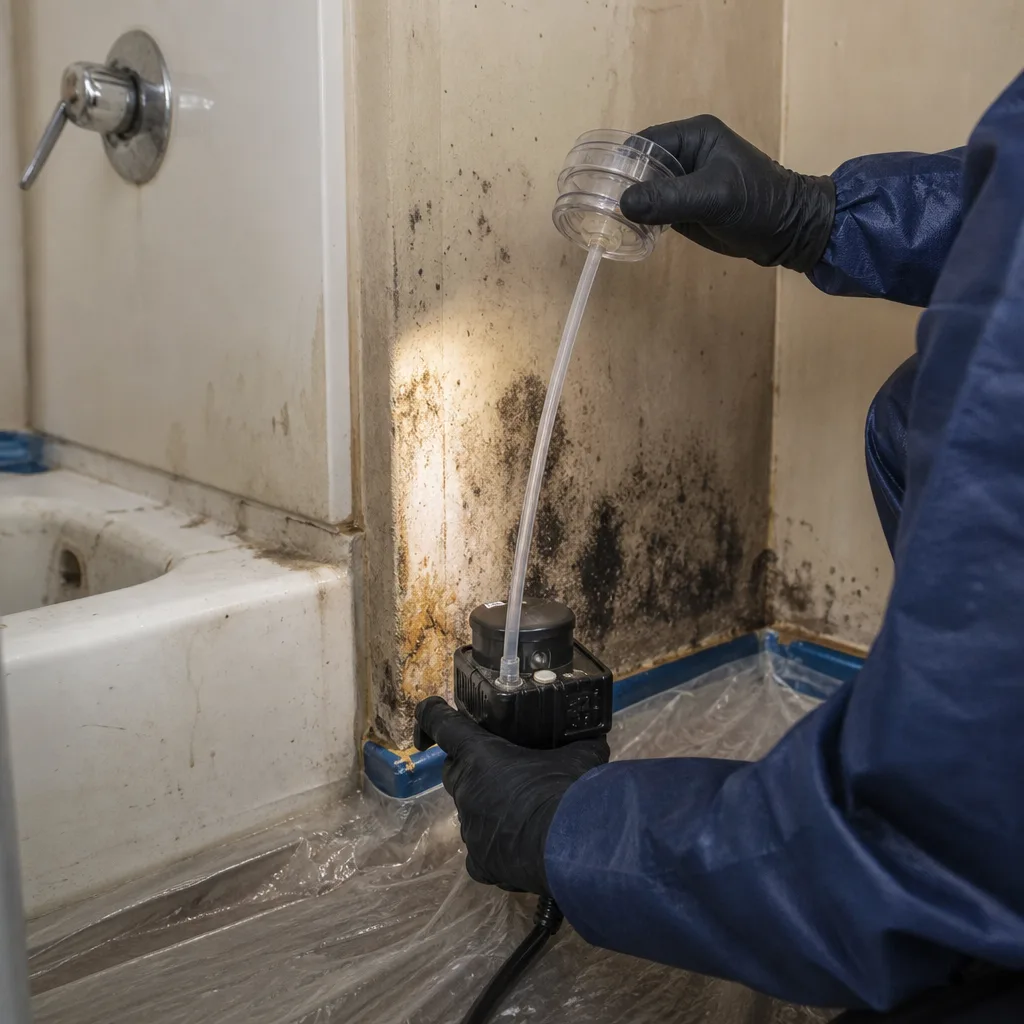
Insurance claim payment for restoration work depends on documentation that most homeowners do not know exists until their claim is denied. These are the actual requirements we navigate daily in our work with Federal Way adjusters and carriers.
Proof of Sudden and Accidental Loss: The policy covers sudden events, not gradual deterioration. Documentation must establish when the loss occurred, when it was discovered, and that it was not ongoing. A water stain that developed over months is not covered; a supply line that failed Tuesday evening is.
Pre-Loss Condition Documentation: Insurers compare restoration scope to the condition before loss. Without photos of undamaged areas, scope disputes arise. We photograph every room, not just affected areas, to establish baseline condition.
Moisture Mapping with Initial and Final Readings: Adjusters require evidence that materials were wet enough to require replacement or drying, and that drying achieved acceptable levels. Our daily moisture logs, recorded to IICRC and RIA standards, provide this evidence in a format that adjusters recognize and accept.
Line-Item Scope with Unit Pricing: The estimate must break down each action, material, and equipment unit by quantity and price. Lump-sum estimates trigger scrutiny and negotiation. Our written scopes specify, for example, “12 air movers @ $30/day x 3 days” rather than “drying equipment: $1,080.”
Photo Documentation of Each Visit: Every site visit must be documented with dated photographs showing work performed and conditions observed. This is standard on every DryMark Restoration Federal Way job, never an upsell.
Certificate of Dryness or Completion: Many carriers now require a signed statement that drying goals were achieved before reconstruction begins. Without this, they may withhold reconstruction funds or require re-inspection.
DIY restoration rarely produces any of these documents. The homeowner has photos, perhaps, but no moisture mapping, no line-item scope, no certification of completion. When the adjuster requests documentation, the homeowner’s options are to accept a reduced settlement or pay a professional to retroactively document conditions that no longer exist.
For Fire & Smoke Damage Restoration in Federal Way, documentation requirements are even more stringent. Smoke damage requires pre-testing of surfaces to determine cleaning methodology, documentation of pre-existing conditions, and verification that residues have been removed to acceptable levels. No homeowner possesses the testing equipment or industry relationships to produce this documentation independently.
Common Mistakes to Avoid
- Extracting water before photographing the source and extent. Once water is removed, the visual evidence of loss severity disappears. Insurers routinely dispute scope based on “it didn’t look that bad” when no photos exist to contradict them.
- Using household bleach on mold. Bleach does not penetrate porous materials and leaves moisture that feeds deeper mold growth. In Federal Way’s humid climate, this accelerates rather than resolves the problem. It also creates a false documentation point: the homeowner believes they addressed the mold, but no remediation record exists.
- Discarding damaged materials before the adjuster inspects. The insurer has the right to inspect damaged materials to confirm scope. Premature disposal results in claim denial for those items. We bag and retain samples until inspection is complete.
- Assuming “dry to the touch” means structurally dry. Drywall can feel dry at 18% moisture content, double the 10% dry standard. Carpet surface can feel dry while the pad below remains saturated. Only moisture meter readings establish actual condition.
- Failing to verify contractor documentation standards before hiring. Not all restoration contractors produce insurer-acceptable documentation. Ask specifically: Will you provide daily moisture logs? A written scope before work begins? Photo documentation of each visit? A signed completion certificate? If the answer to any is no, the contractor is creating the same documentation gap as DIY.
- Ignoring crawl space moisture after main floor drying. In Federal Way’s clay-soil neighborhoods like Westway and Adelaide, water migrates to crawl spaces and remains trapped. Six months later, structural damage appears with no clear connection to the original loss, and the insurer denies coverage.
- Attempting DIY fire damage cleanup without respiratory protection. Smoke residues contain acids, heavy metals, and combustion byproducts that cause respiratory injury. This is not a documentation issue; it is a genuine health hazard. Professional restoration includes engineered containment and air filtration for worker and occupant protection.
When to Call a Professional
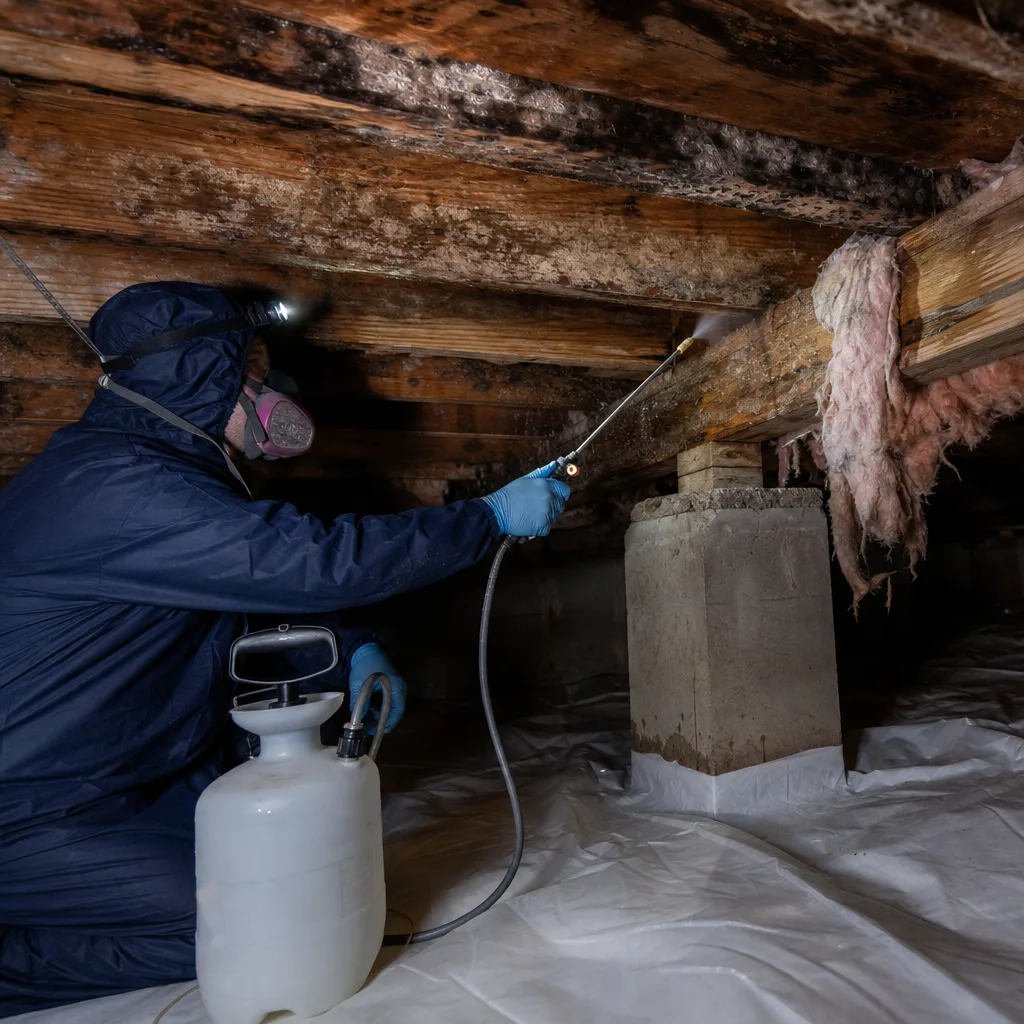
Call a professional restoration contractor when any of these conditions apply: the water source is unknown or potentially contaminated; affected area exceeds 10 square feet or involves wall cavities; more than 24 hours has elapsed since the loss; mold is visible; fire or smoke is involved; you intend to file an insurance claim; or you cannot verify structural drying with proper measurement equipment. In Federal Way’s marine climate, the margin for error is narrower than in drier regions, and the documentation requirements for insurance payment are non-negotiable.
DryMark Restoration Federal Way offers free estimates in Federal Way. Every estimate includes a written scope of work with line-item pricing before any work begins, documented to Haven Standard, Clause 1. We provide photo documentation on every visit, daily moisture logs to IICRC standards, and the 365-Day Done Right Promise backed by The Haven Standard. For emergency water damage, our live dispatch answers 24 hours a day, 7 days a week at (253) 322-4873. For non-emergency assessments or a free second opinion on any competitor’s written estimate, call the same number to schedule, or browse more guides & resources on protecting your Federal Way home.
Frequently Asked Questions
Professional water damage restoration in Federal Way typically ranges from $3,200 for contained clean-water losses under 150 square feet to $8,500-$14,000 for whole-basement flooding with category 2 or 3 water and wall cavity involvement. These figures include extraction, structural drying with professional-grade equipment, moisture mapping, and documentation. Our written estimate, provided before any work begins under Haven Standard, Clause 1, specifies exact scope and pricing for your specific loss. Call (253) 322-4873 for a free estimate.
Insurance may cover water damage after DIY attempts, but the settlement is frequently reduced by 40-70% when documentation is incomplete. Insurers argue that DIY extraction resolved the original loss, and subsequent damage represents separate, excluded events. The most common exclusion applied is “gradual deterioration” or “maintenance-related damage.” Professional restoration protects your coverage by establishing a documented chain of causation from the original loss through final completion.
Our live dispatch answers emergency calls 24 hours a day, 7 days a week with no voicemail trees. Crew dispatch for water damage emergencies in Federal Way typically occurs within 60-90 minutes of call receipt during normal conditions, though severe weather events affecting multiple properties may extend this window. We communicate estimated arrival time when you call. For non-emergency assessments, we schedule within 24 business hours.
For visible mold under 10 square feet on hard, non-porous surfaces, cleaning with appropriate antimicrobial agents and HEPA vacuuming may be sufficient if you document the area with photos and confirm no hidden growth exists. For mold exceeding 10 square feet, on porous materials like drywall or carpet, or when HVAC systems may be involved, professional remediation is recommended under IICRC S520 guidance and may be required for insurance coverage. Washington State worker protection rules also apply to disturbance of larger areas. We provide free mold assessments in Federal Way with written scope and pricing before any work begins.
At DryMark Restoration Federal Way, we coordinate directly with your adjuster as part of our standard service. This includes providing all required documentation: moisture logs, photo records, line-item estimates, and completion certificates. We do not charge additional fees for adjuster coordination. Our documentation is formatted to the standards that adjusters recognize from IICRC, RIA, and IFA protocols, reducing negotiation time and claim disputes. You remain the policyholder and must authorize all work; we handle the paperwork burden.
Demand these deliverables before work begins: a written scope with line-item pricing signed by both parties; daily moisture logs with initial, progressive, and final readings; dated photo documentation of each site visit; a certificate of dryness or completion; and a written warranty. Under The Haven Standard, these are standard deliverables on every DryMark Restoration Federal Way job, never upsells. Contractors who cannot or will not provide this documentation are creating the same claim risk as DIY restoration.
The Bottom Line
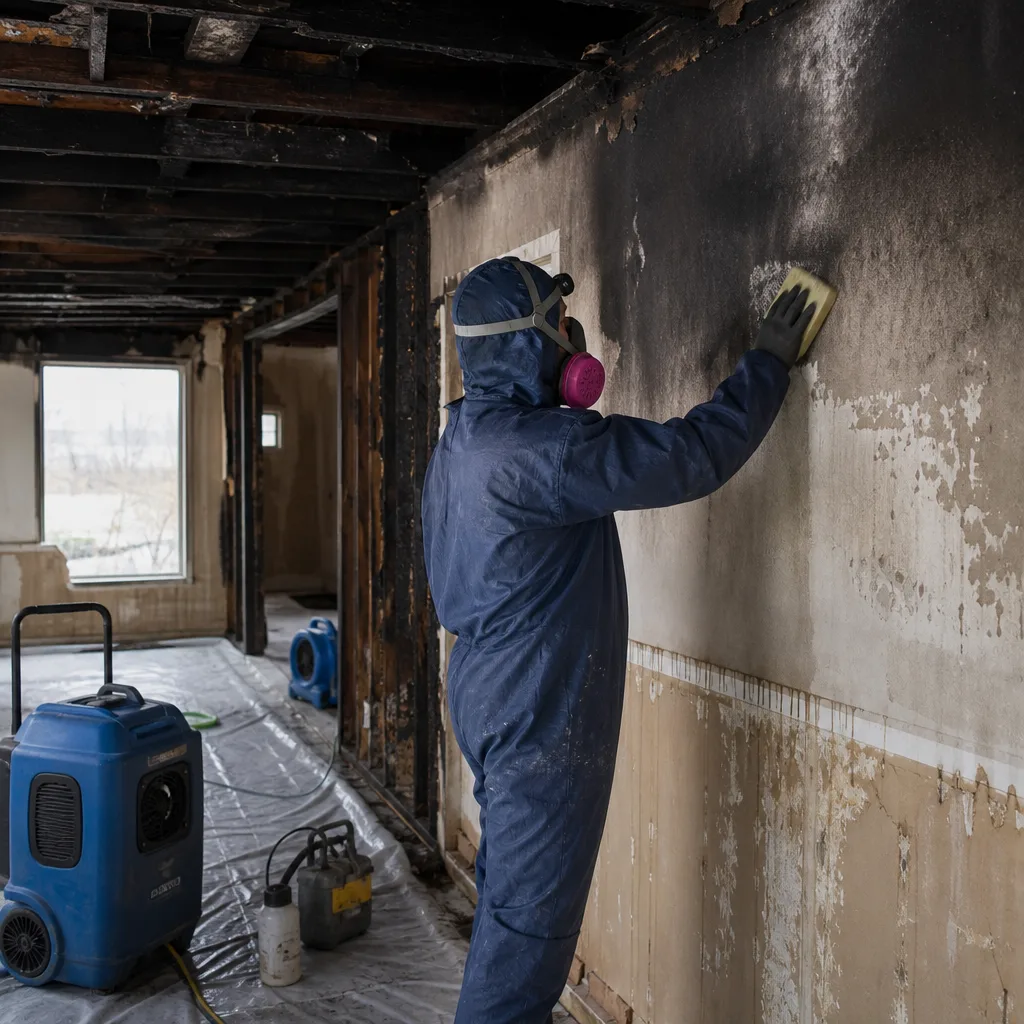
The DIY versus professional restoration decision is not about your capability with a shop vac or your tolerance for disruption. It is about documentation, because documentation determines whether your insurer pays your claim in full, partially, or not at all. In Federal Way’s challenging marine climate, the physical risks of incomplete drying are real, but the financial risk of undocumented work is often larger. For losses that meet strict criteria, Category 1 water under 10 square feet, discovered promptly, with no insurance involvement, DIY action is defensible if you document thoroughly before touching anything. For everything else, professional restoration is not a convenience. It is claim protection. The written price before work begins, the daily moisture logs, the photo record on every visit, these are the evidence that turns restoration costs into payable claims. Without them, you are not restoring your home. You are negotiating your settlement with no leverage.
Written by Alicia Brennan, Owner at DryMark Restoration Federal Way, serving Federal Way since 2011.