
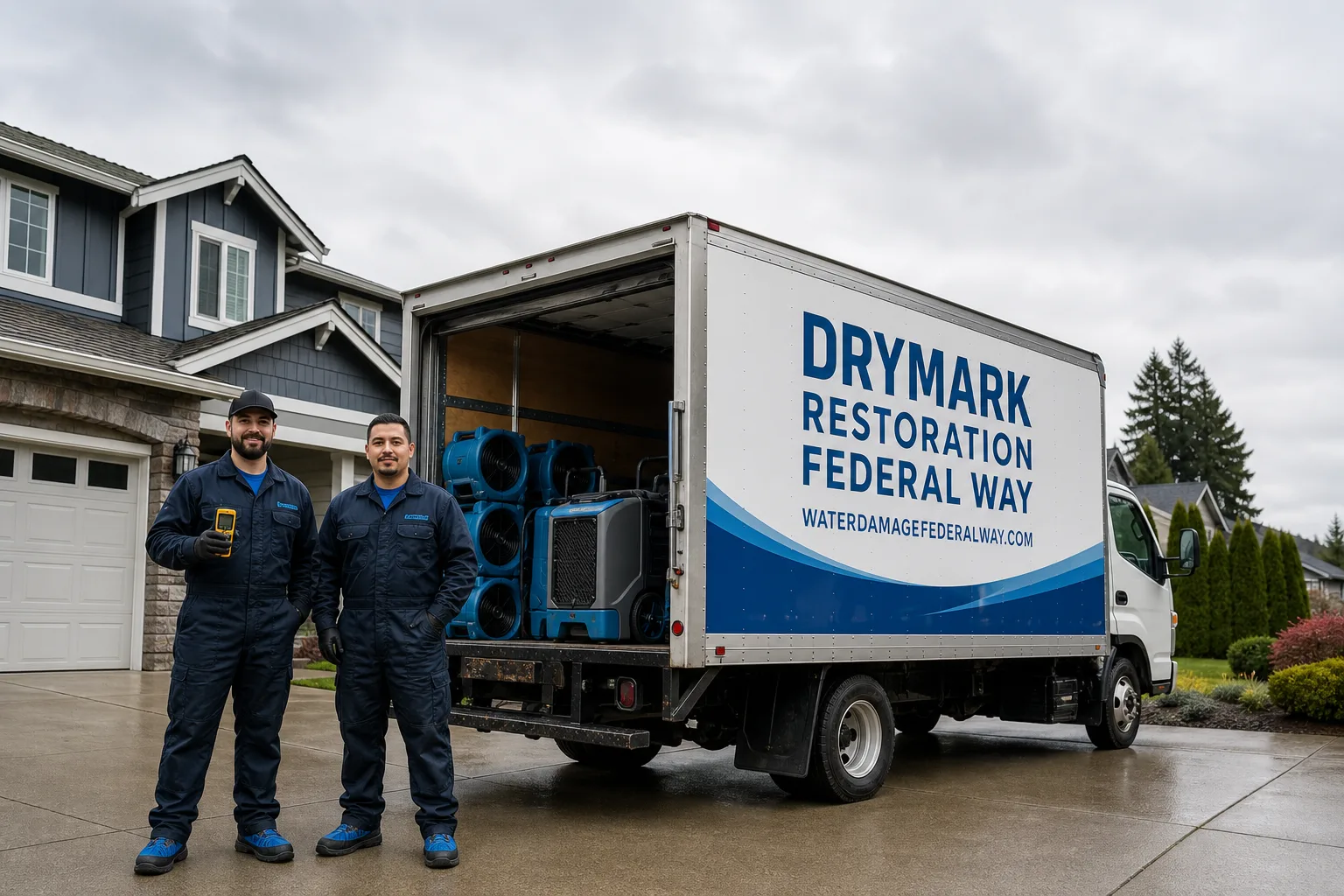
Free visual inspection and a written scope of work before any mitigation begins - photos, moisture readings, and drying logs go in your claim file
The scope we write is the scope we bill. Anything new gets shown to you, in writing, before we touch it.
 Before
 After
After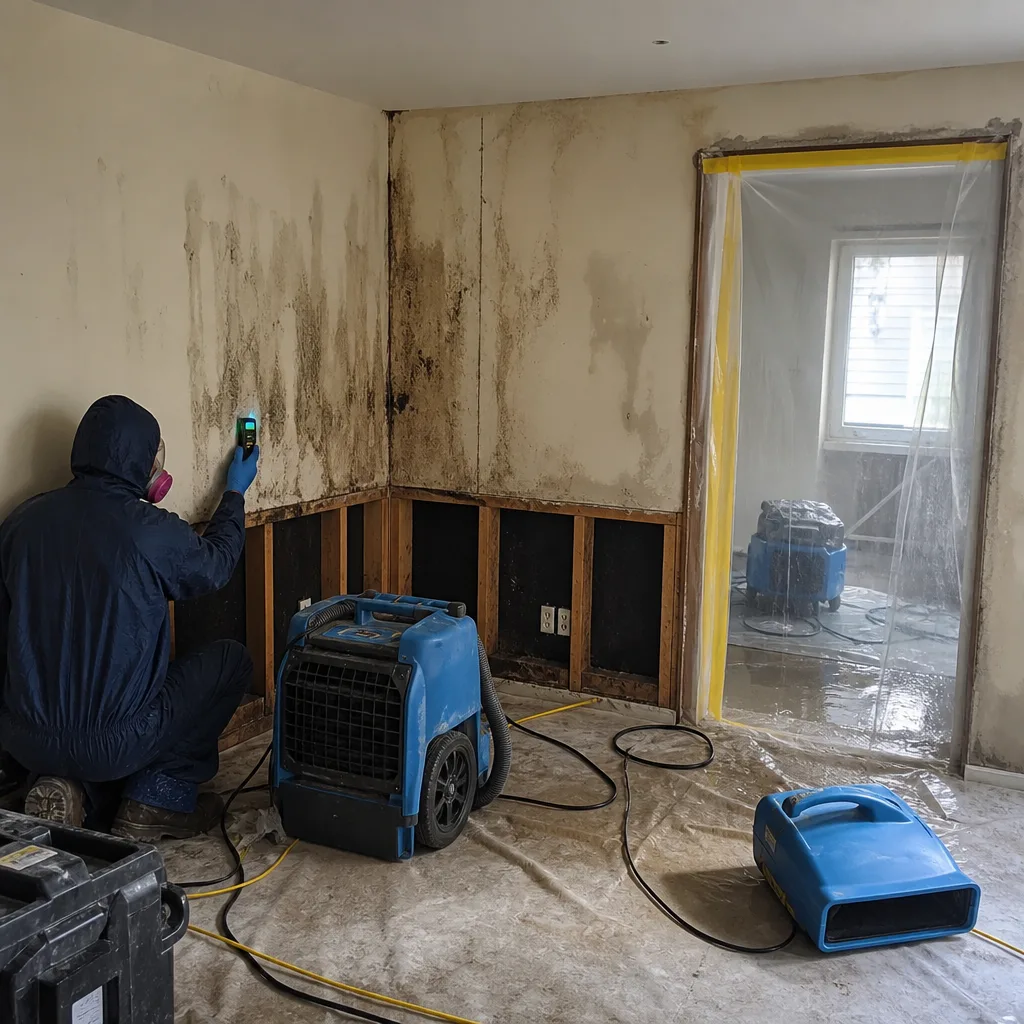 Before
 After
After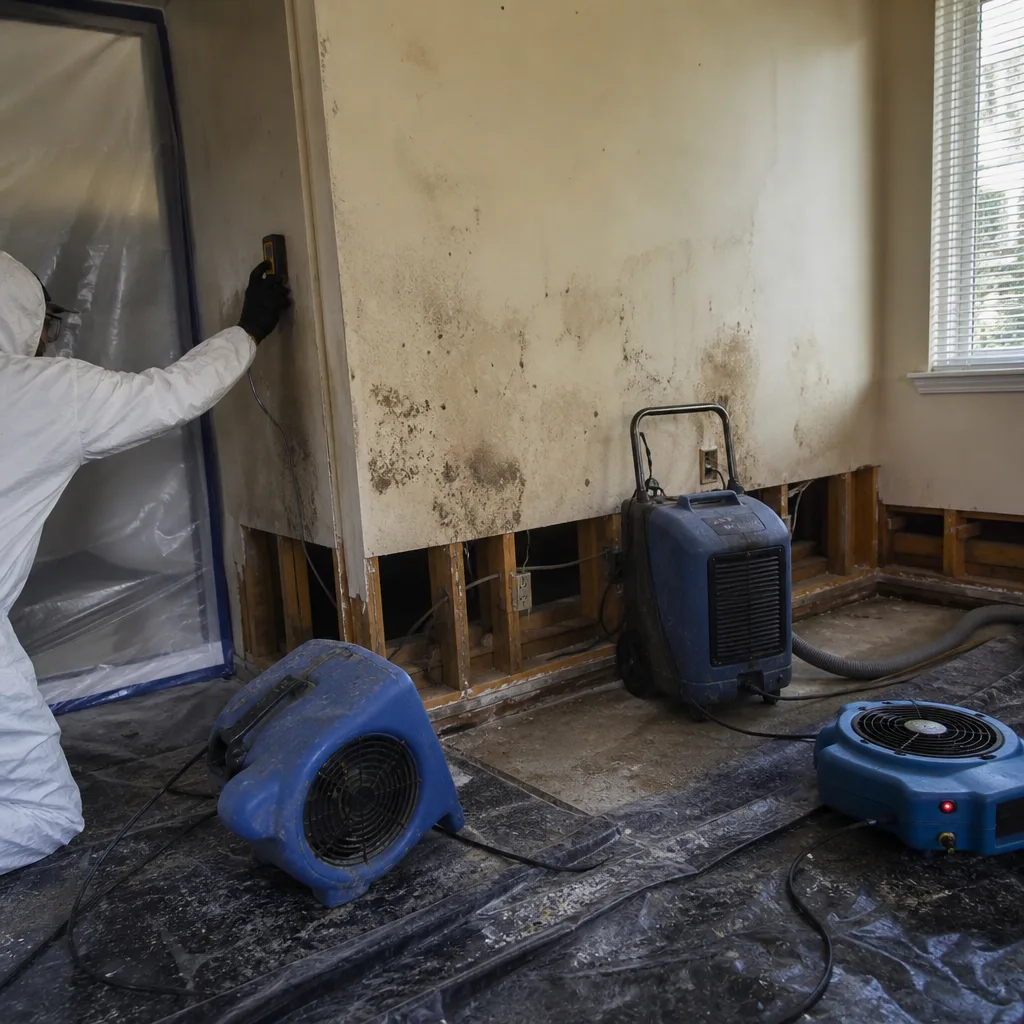 Before
 After
AfterFast, Reliable Water Damage Restoration Across Des Moines
Water damage restoration in Des Moines typically costs between $1,800 and $6,500 depending on the affected square footage, contamination category, and whether structural drying or pack-out services are needed. Most emergency calls in Des Moines receive a crew on-site within 60-90 minutes, with our Water Damage Restoration team dispatched from our Seattle office to neighborhoods from Maury to Star Lake to Wyngates. Call (253) 322-4873 now - a live person answers every call, 24 hours a day, 7 days a week, and we deliver a written price before any work begins, every time, under Haven Standard, Clause 1.
Des Moines sits on Puget Sound bluffs cut by the Des Moines Creek watershed, creating a dual damage threat unique in the subregion. Homes along Marine View Drive South suffer chronic lateral groundwater intrusion through foundations as slope drainage funnels Pacific storm runoff downhill. Creek-adjacent properties in lower areas like Hearthside face direct stormwater flooding. The persistent marine air off the Sound keeps indoor humidity elevated even after visible water is removed, making mold remediation a near-universal secondary service call here compared to inland South King County cities. We’ve restored over 12,000 homes since 2011, and the jobs we handle in Des Moines require fundamentally different moisture-mapping protocols than our work in Federal Way or Auburn.
Why DryMark Restoration Federal Way Is Des Moines’s Preferred Water Damage Restoration Company
Our reputation in Des Moines was built on documentation that survives adjuster scrutiny. Homeowners here research vendors carefully - they read three-star reviews, ask about pricing upfront, and measure trust by what we can show them. We answer with photo-documented assessments, room-by-room moisture readings, and daily drying logs that turn restoration invoices into payable claims.
Response time to Des Moines averages 60-90 minutes for emergency water calls. Crews coordinate dispatch from our Seattle office and travel International Boulevard or Southwest 320th Street depending on traffic and which Des Moines neighborhood needs us - Maury, Star Lake, or the bluff homes along Marine View Drive South.
Local knowledge matters because Des Moines homes fail in predictable ways that generic crews miss. The 1950s-1970s ranch and split-level stock built during the Boeing workforce expansion sits at or near the water table on bluff slopes. Original untreated wood framing absorbs marine moisture. Older crawl spaces lack vapor barriers. We’ve learned that standard moisture readings taken at interior wall surfaces mislead on hillside homes - lateral groundwater wicks through uphill foundation walls, keeping structural framing saturated long after surface dryout goals are reached. Jobs closed without extended blower-door monitoring generate callback mold claims within 60-90 days. We don’t close Des Moines jobs until psychrometric data confirms stability, not just surface dryness.
Our Water Damage Restoration Services in Des Moines
Emergency Water Extraction
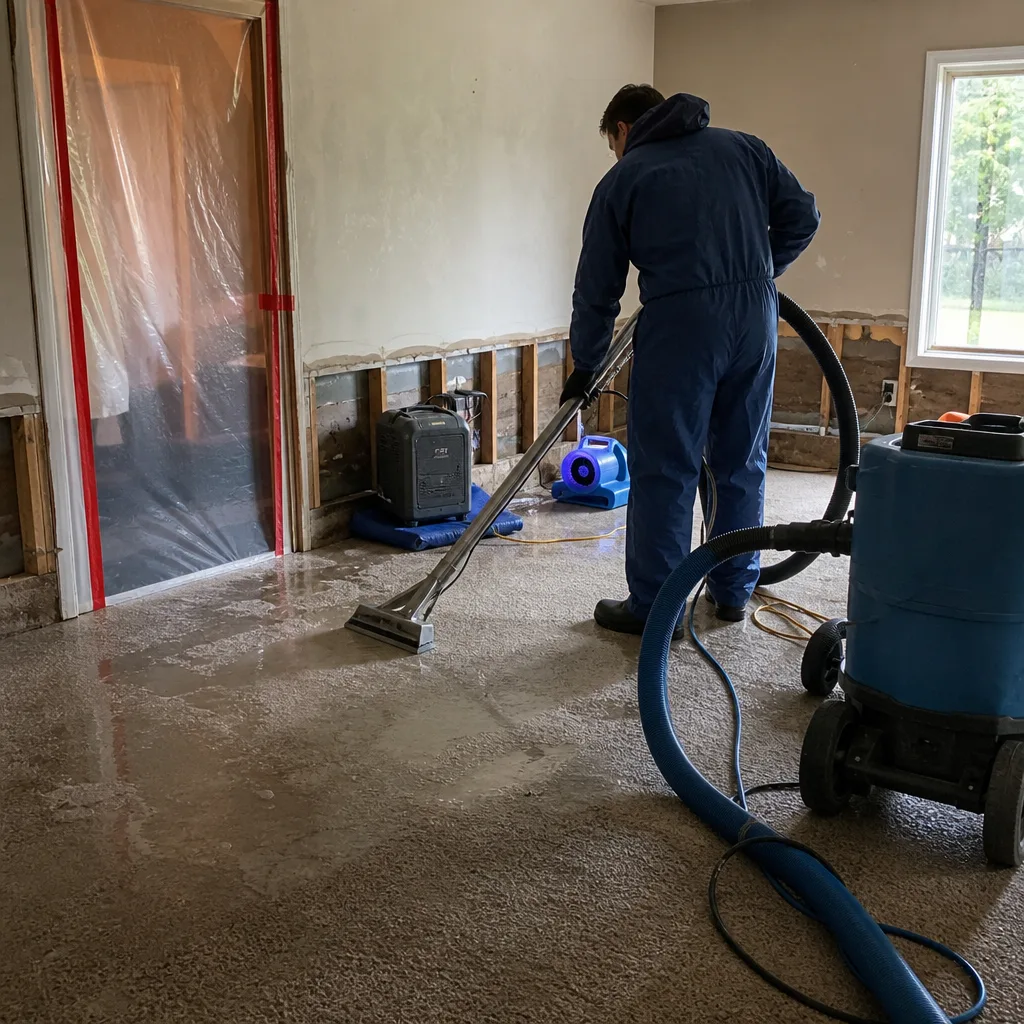
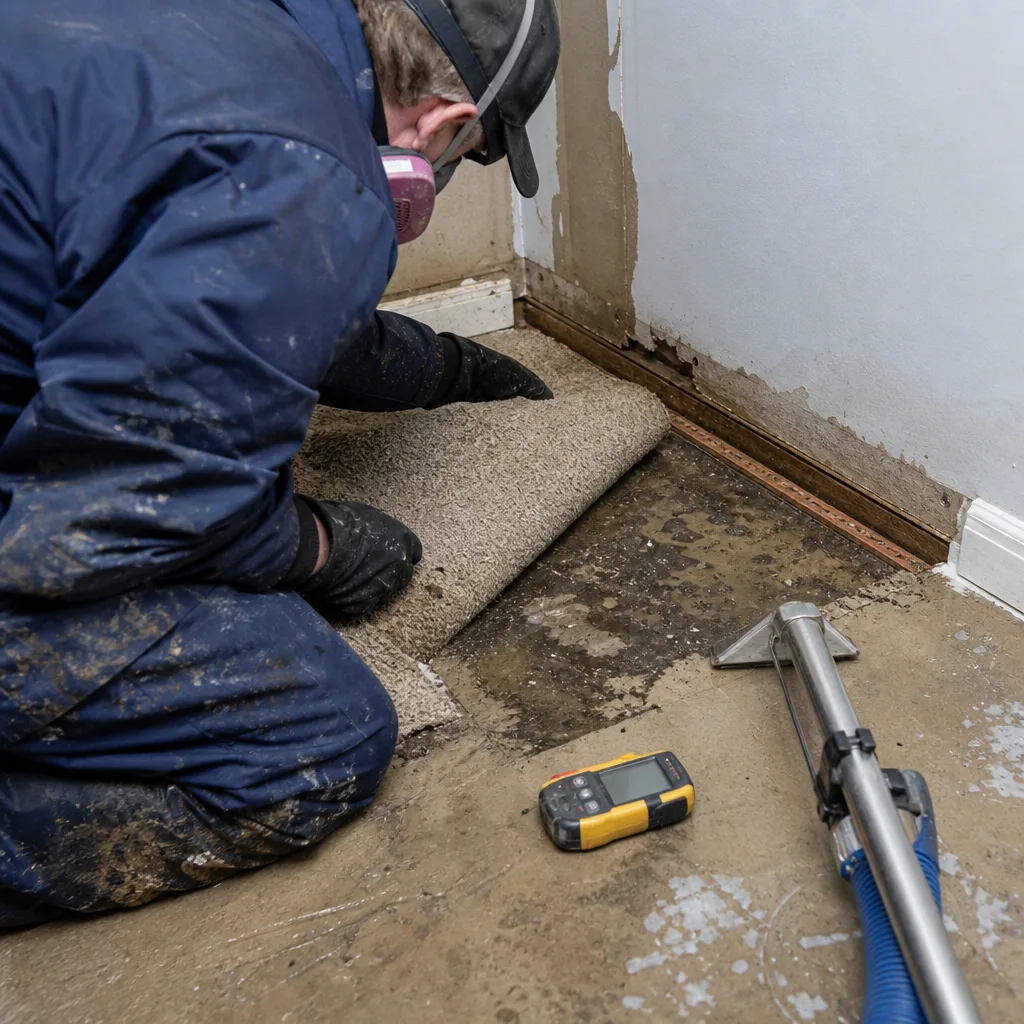
When water enters a Des Moines home - whether from a burst pipe on Canyon Drive, a failed water heater in Wyngates, or storm backup near Des Moines Creek - speed matters for category 1 and 2 losses. We extract standing water with truck-mounted systems and portable units sized to the space. Every extraction is photo-documented before and after, with moisture readings recorded at multiple depths. The written scope arrives before equipment setup begins, per Haven Standard, Clause 1.
Structural Drying & Dehumidification
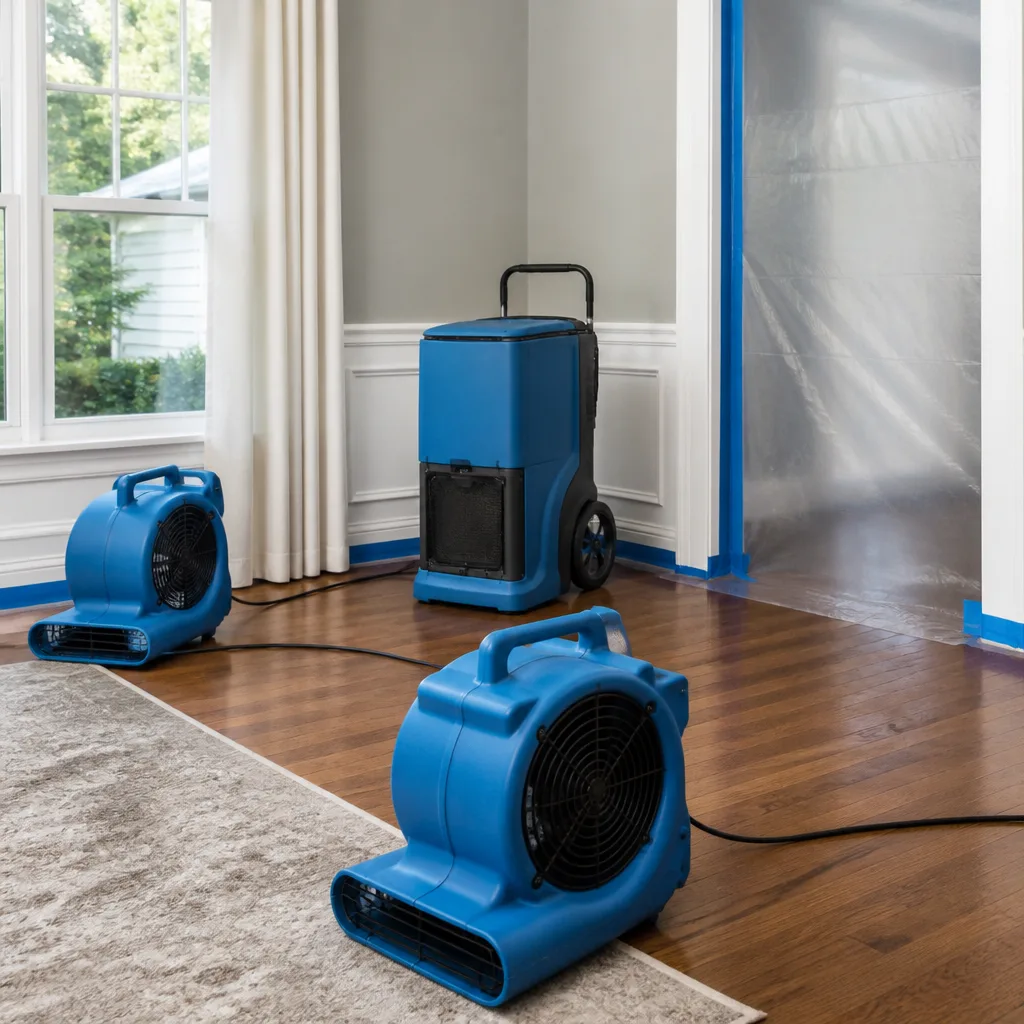
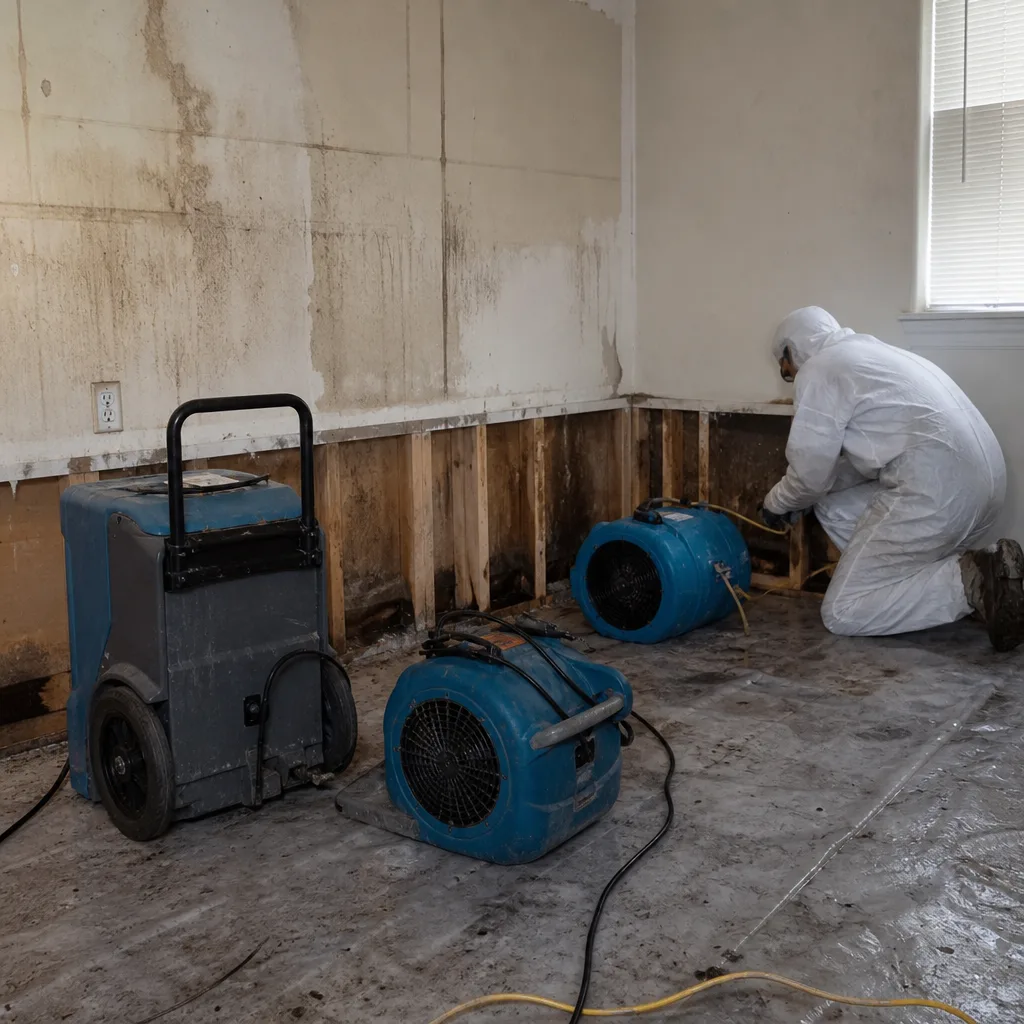
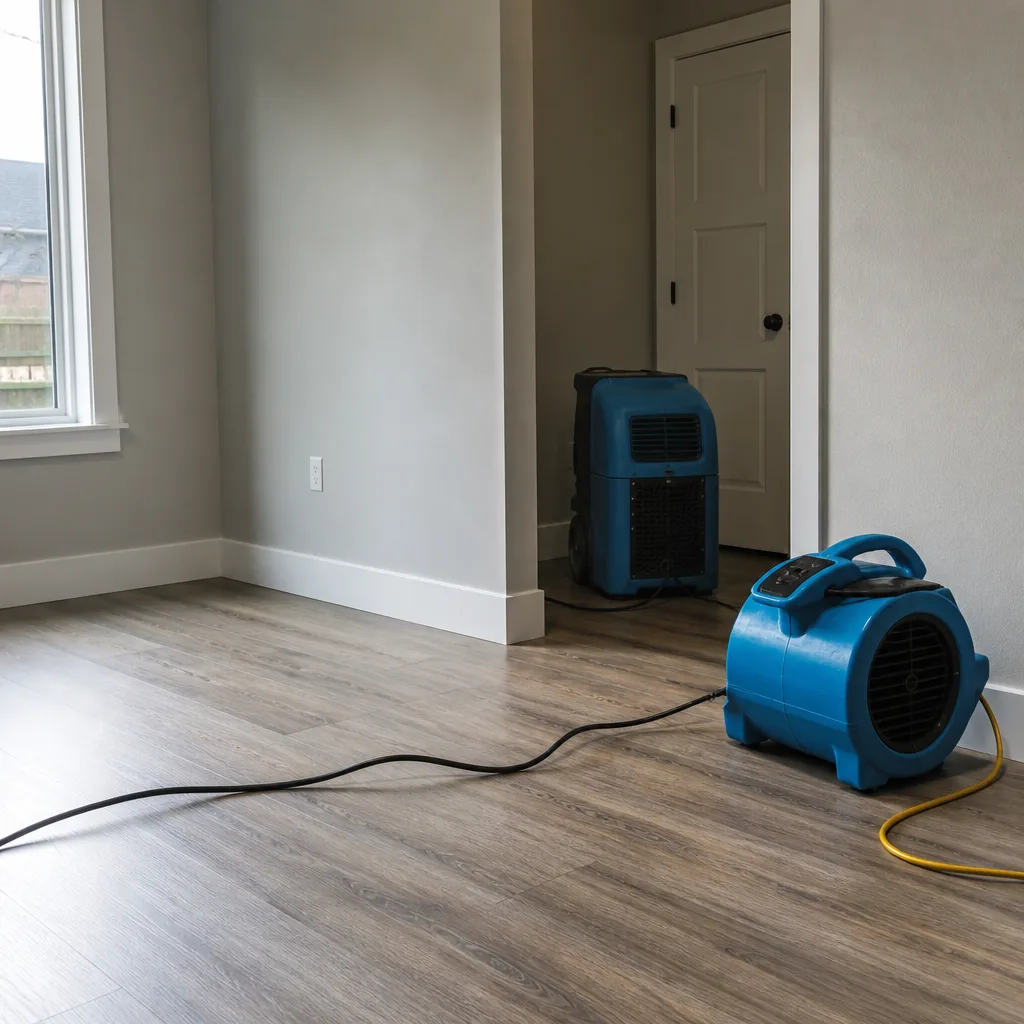
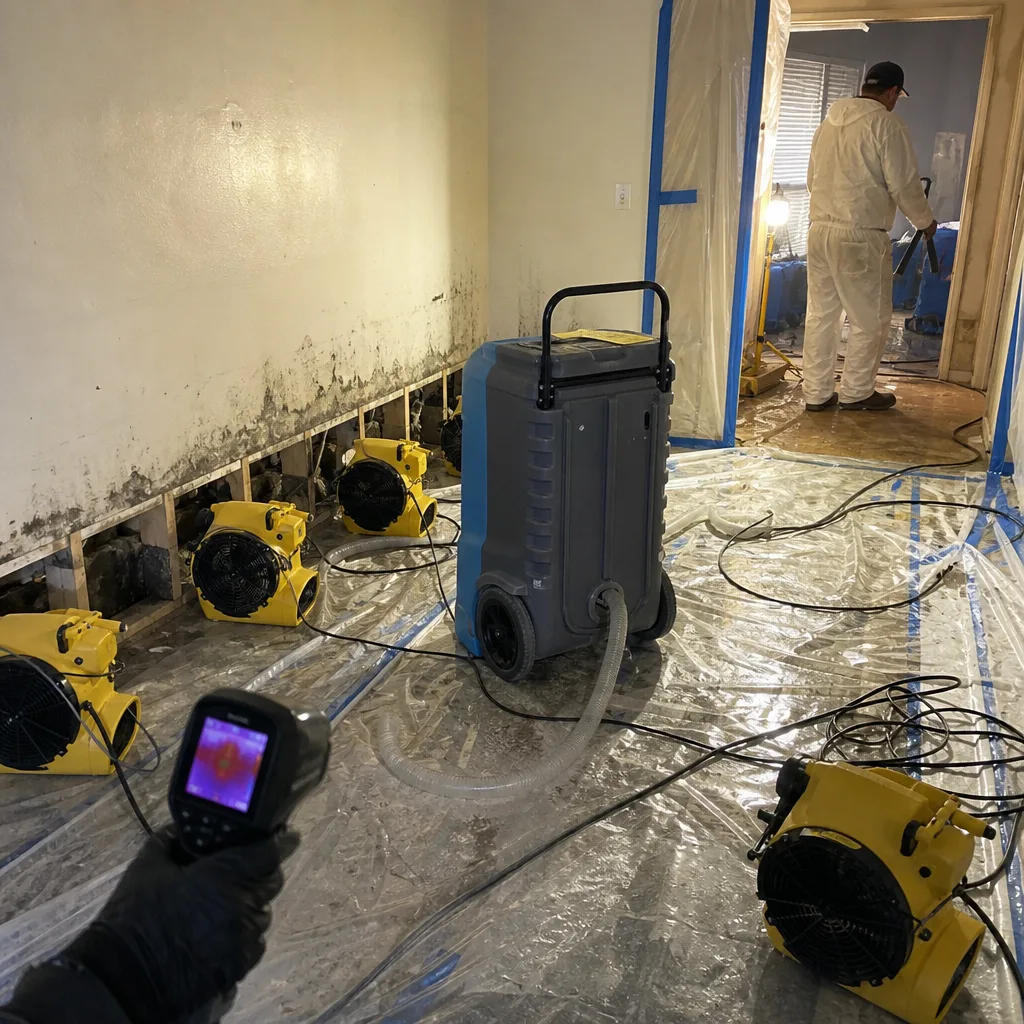
This is where Des Moines diverges from inland protocols. The marine microclimate keeps relative humidity elevated even during dry periods, slowing drying times and creating ideal conditions for Stachybotrys and Chaetomium growth inside walls and crawl spaces. We deploy Phoenix dehumidifiers and XPOWER air movers sized to the vapor pressure differential - the force that drives moisture from wet materials into drier air. Our crews calculate equipment loads using psychrometric data, not rule-of-thumb charts. For bluff-side homes, we run extended drying cycles with blower-door monitoring to confirm that framing cavities have reached equilibrium, not just surface boards. Our field vignette: our techs were called to a 1960s split-level on Marine View Drive South where a homeowner reported a damp basement after a January storm. Moisture readings at the interior wall surface read dry, but our thermal imaging and pin-type meters showed saturated framing deep in the uphill foundation wall - classic lateral groundwater intrusion from bluff runoff. We set up containment, ran Phoenix dehumidifiers and XPOWER air movers for four extra days, logged the extended drying, and confirmed stability with blower-door monitoring before closing the job.
Flood Cleanup
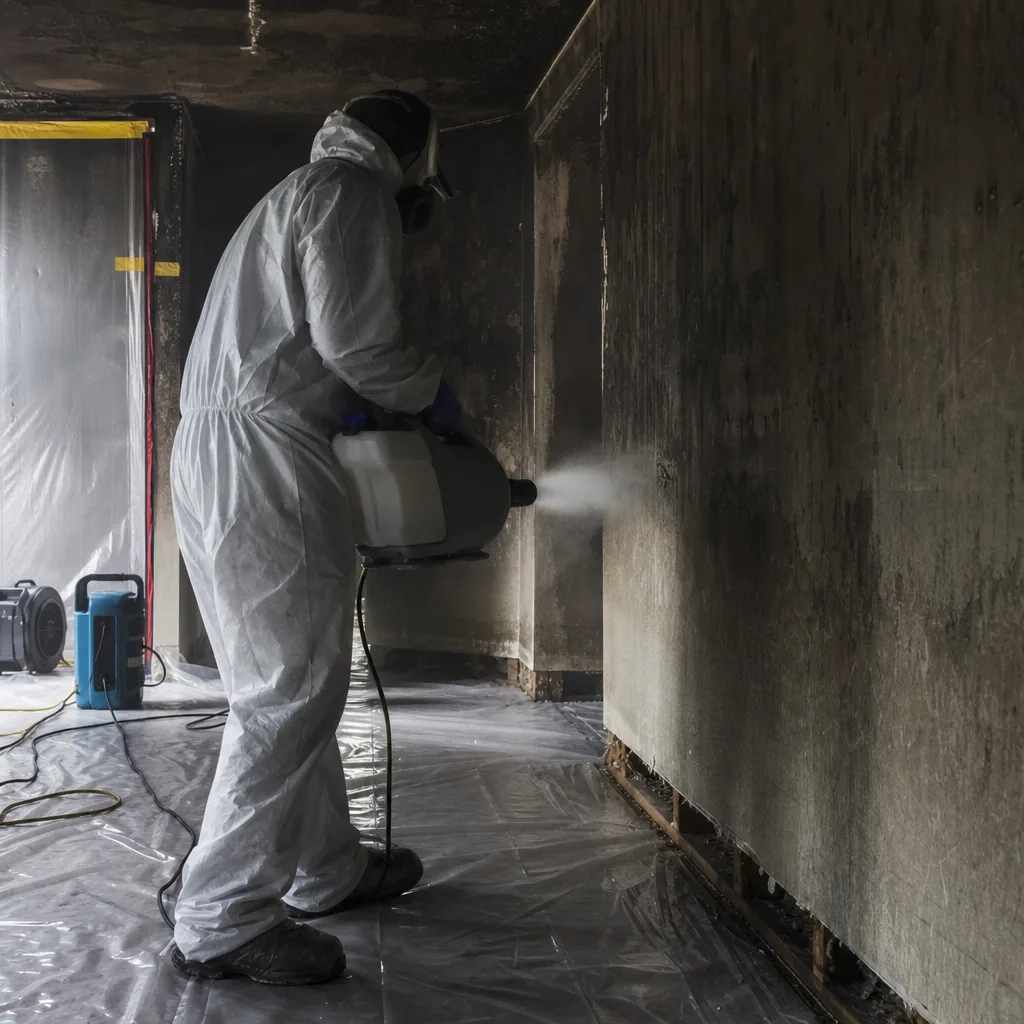
Des Moines Creek overflow and stormwater flooding in lower neighborhoods like Hearthside introduce category 3 black water - water containing pathogens, chemicals, and debris from surface runoff. This requires full PPE, controlled demolition of contaminated porous materials, and antimicrobial treatment of remaining structural elements. Crews sometimes misclassify this as category 2 grey water, failing to remove contaminated materials and risking health hazards. We test and classify every flood loss in Des Moines before demolition begins, with photo documentation at each stage for adjuster review.
Burst Pipe Restoration
Older copper and galvanized plumbing in Des Moines’s 1950s-1970s housing stock fails predictably at joints and where pipes enter slabs. We extract water, dry affected assemblies, and document the line of damage with photos and moisture maps. If reconstruction is needed, we provide a written scope separate from the emergency mitigation invoice - reconstruction is scheduled and priced like a remodel, not dispatched same-day.
What happens when you call
- 1
A real person answersNo phone trees - you reach a local pro.
- 2
You get an upfront price rangeHonest numbers before anyone is dispatched.
- 3
A background-checked tech heads outLicensed & insured, dispatched right away.
- 4
You approve before work beginsNothing starts until you say go.
 Before
 After
AfterTrusted Brands We Service in Des Moines
Our drying equipment fleet includes Dri-Eaz and Phoenix dehumidifiers, XPOWER and B-Air air movers, and Injectidry cavity-drying systems. We stock local parts and maintain backup units so Des Moines jobs aren’t delayed by equipment shortages. Every machine is logged to the job file with serial numbers, run hours, and placement diagrams - part of the documentation package that accompanies your invoice to the adjuster.
Common Water Damage Restoration Problems We See in Des Moines Homes
- Bluff-side lateral groundwater intrusion. Homes along Marine View Drive South and similar hillside streets take on water through foundation walls, not just floors. Standard surface moisture readings miss the saturated framing behind drywall, leading to mold callbacks within 60-90 days on jobs closed too quickly.
- Untreated wood framing in post-war ranches. The 1950s-1970s stock built for Boeing workers used framing that absorbs and retains marine moisture. Drying equipment sized for inland South King County jobs under-dries these structures, leaving hidden pockets that spawn Stachybotrys and Chaetomium.
- Crawl spaces without vapor barriers. Extremely common in Des Moines’s older inventory. Ground moisture evaporates directly into the crawl space, raising humidity in the living space above and masking the true source of water damage until mold appears on floor joists.
- Category 3 misclassification in creek-adjacent homes. Properties near Des Moines Creek in lower areas like Hearthside face black water from stormwater flooding. Crews unfamiliar with local topography sometimes treat this as grey water, skipping the controlled demolition and antimicrobial steps that protect occupants.
Pricing for Water Damage Restoration in Des Moines, WA
Typical water damage restoration in Des Moines runs $1,800-$3,200 for limited Category 1 clean water extraction and drying of one or two rooms; $3,500-$6,500 for Category 2 grey water or whole-floor drying with pack-out; and $6,000-$12,000+ for Category 3 black water losses requiring demolition, antimicrobial treatment, and reconstruction. Bluff-side homes with lateral groundwater intrusion often fall in the upper range due to extended drying cycles and blower-door monitoring.
Factors that move the price: affected square footage, contamination category, whether contents must be packed out, accessibility for equipment (tight crawl spaces add labor), and whether reconstruction is needed beyond drying. Every job receives a written price before work begins - Haven Standard, Clause 1 - with no scope-creep additions once the crew is inside. We also offer a Free Second Opinion on any competitor’s written estimate. Call (253) 322-4873 for your exact quote; estimates are free.
We Also Serve Cities Near Des Moines
Our crews handle Water Damage Restoration in Des Moines and surrounding communities including Federal Way, Milton, Edgewood, and Auburn. Dispatch and scheduling are coordinated from our Seattle office, with local crews serving each community’s specific conditions - from Des Moines’s Puget Sound bluffs to Auburn’s valley floodplains.
Serving Des Moines, WA - Our Local Coverage Area
We’re based in the Des Moines area and know this community well. Use the map below to see our service coverage - if you’re nearby, we can almost certainly help.
FAQs - Water Damage Restoration in Des Moines
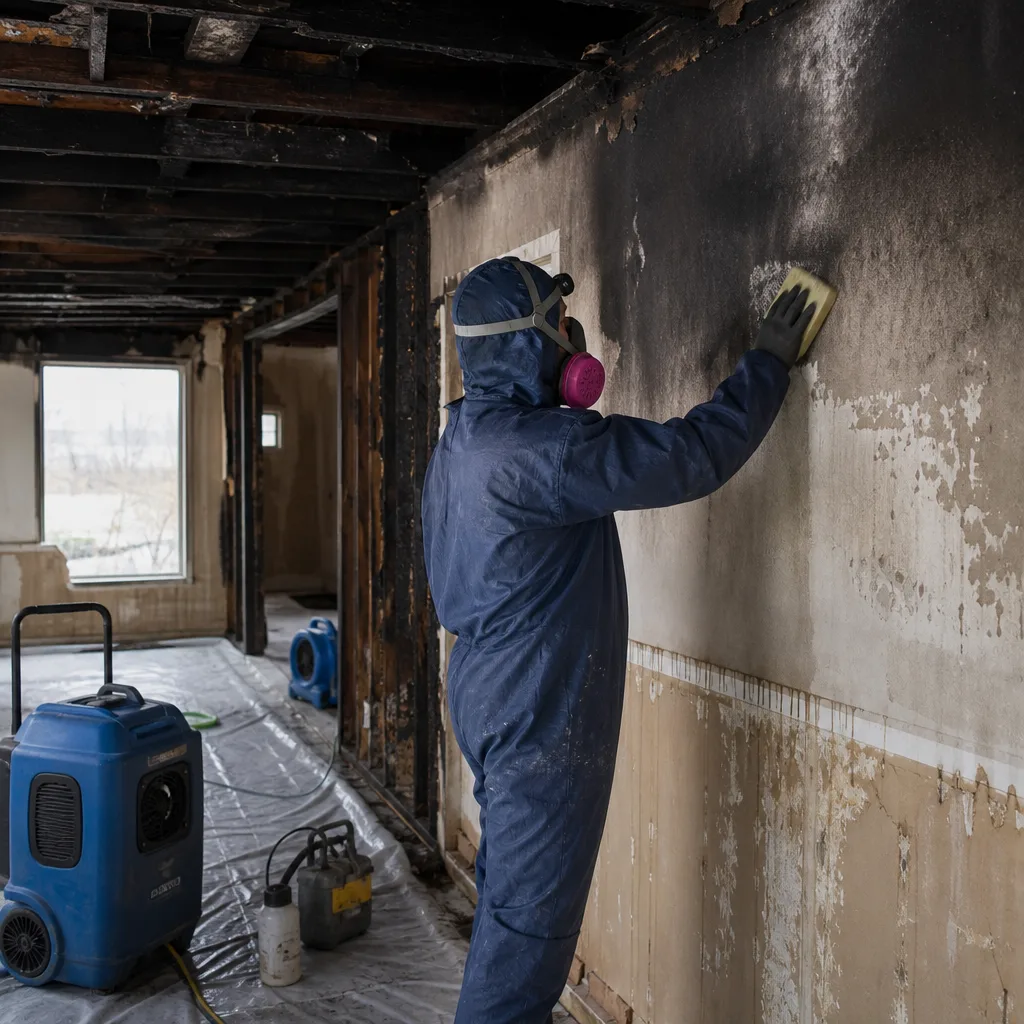
Callbacks happen when crews rely on surface moisture readings alone and miss saturated framing behind foundation walls. In Des Moines’s bluff-side homes, lateral groundwater wicks through uphill foundation walls continuously during wet seasons, keeping insulation cavities wet long after interior drywall reads dry. We prevent this with thermal imaging, pin-type meters at multiple depths, and extended blower-door monitoring before job closure. Call (253) 322-4873 if you suspect a previous job was closed too quickly - we assess at no charge.
Yes, Des Moines Creek overflow is Category 3 black water. This classification means the water contains pathogens, chemicals, and debris from surface runoff, requiring full PPE, removal of contaminated porous materials (drywall, insulation, carpet pad), and antimicrobial treatment of remaining structural elements. Crews who treat this as Category 2 grey water skip critical steps and leave health hazards behind. We test and classify every flood loss before demolition begins. Call (253) 322-4873 for immediate response.
The salt air doesn’t directly damage restoration equipment, but the marine microclimate it creates does affect drying. Puget Sound exposure keeps relative humidity elevated even during dry periods, slowing evaporation rates and extending drying times. This same humidity creates ideal conditions for Stachybotrys and Chaetomium mold growth inside walls following any water intrusion. Our Des Moines protocols use larger dehumidifier capacity and longer run times than our inland protocols to compensate.
The biggest mistake is stopping at visible dryness. In Des Moines’s 1950s-1970s housing stock, water travels through untreated wood framing and collects in insulation cavities far from the original leak. Surface drying with consumer-grade fans leaves these pockets saturated, and the persistent marine humidity prevents natural evaporation. Within 30-60 days, mold appears. Professional moisture mapping with thermal imaging and pin-type meters finds what eyes miss. Call (253) 322-4873 before hidden damage spreads.
Pack-out is required when contents block equipment placement, when category 2 or 3 contamination has affected them, or when structural drying requires access to wall cavities or subflooring. We inventory, photograph, and document every item before moving it to our climate-controlled storage facility. The photo record is included as a standard deliverable, never an upsell. For Category 1 losses with minimal contents, on-site blocking and protective covering may suffice - your written scope will specify which approach applies to your job. Call (253) 322-4873 to discuss your situation.
Written by Alicia Brennan, Owner at Back to Dry Restoration, serving Des Moines since 2011 under The Haven Standard.