
Last updated September 23, 2026
Free visual inspection and a written scope of work before any mitigation begins - photos, moisture readings, and drying logs go in your claim file
The scope we write is the scope we bill. Anything new gets shown to you, in writing, before we touch it.
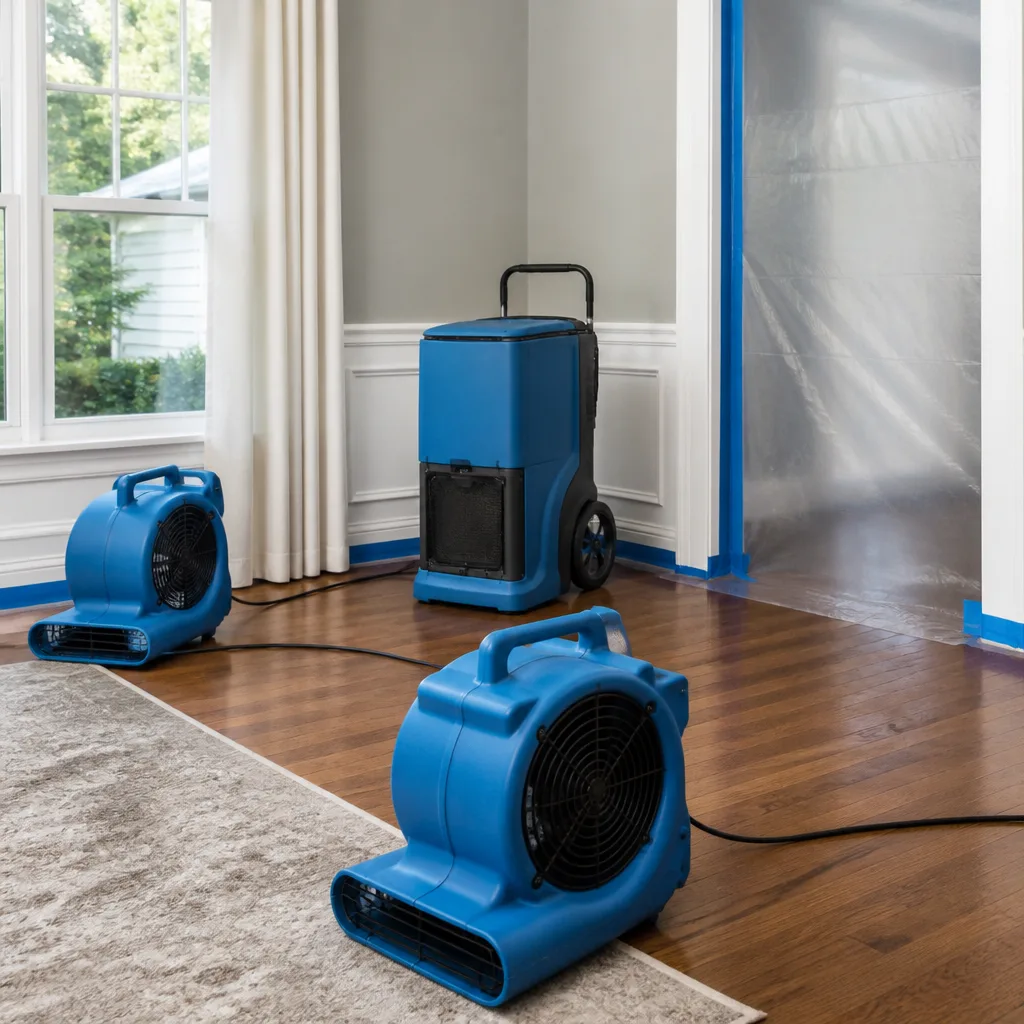
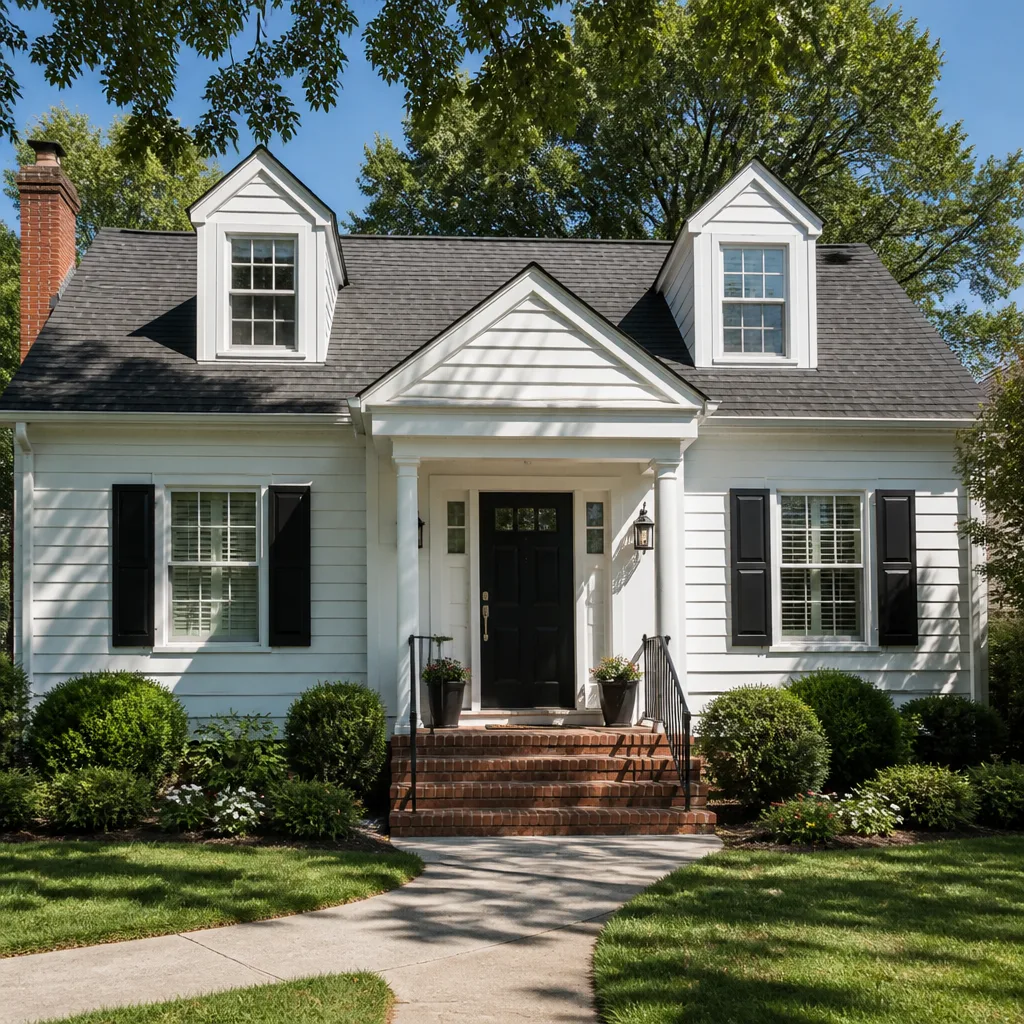
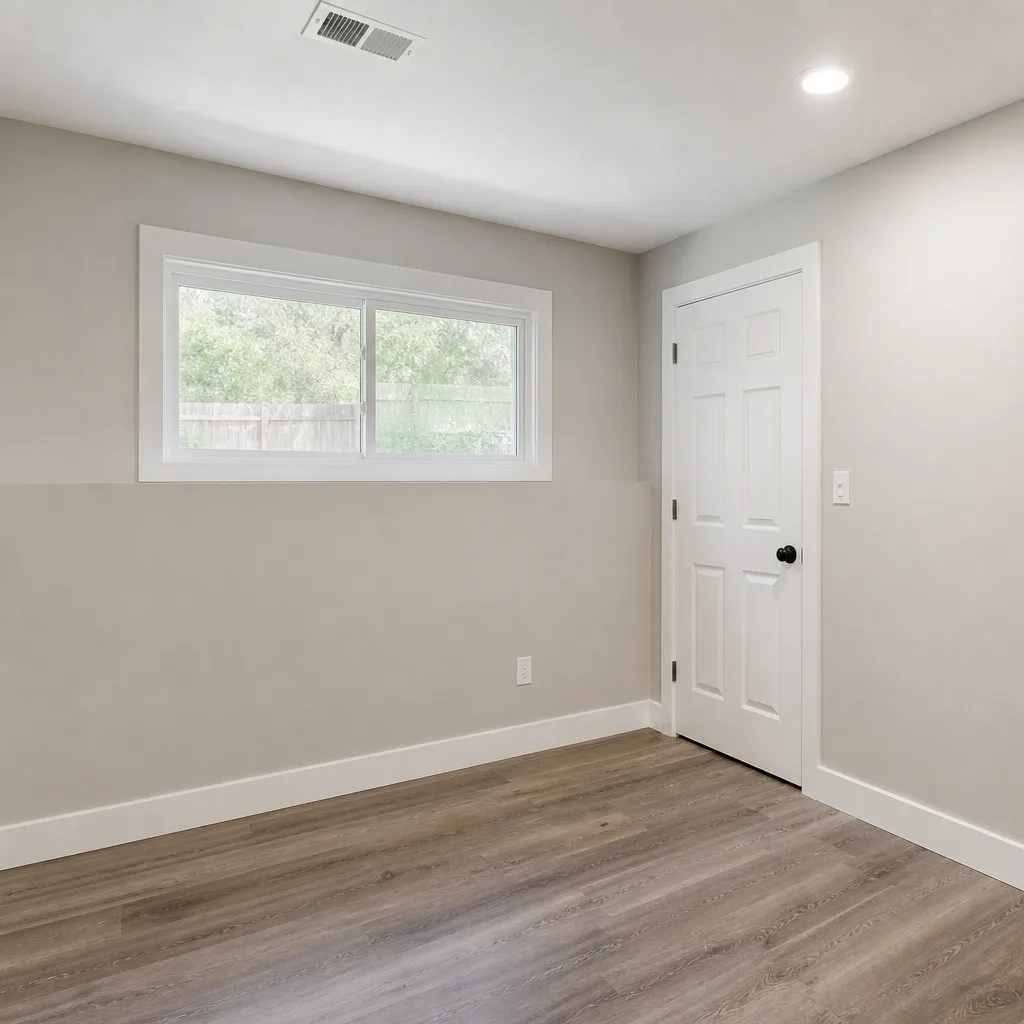
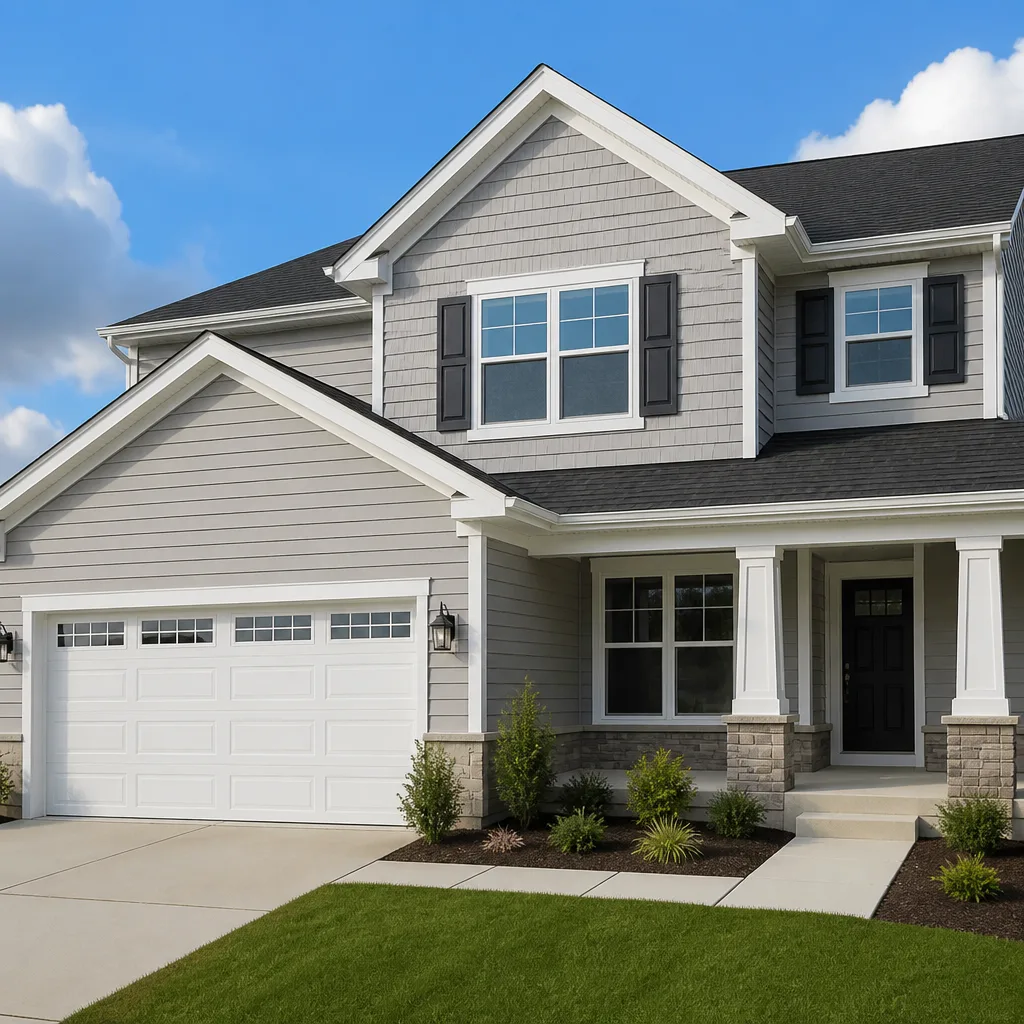
 Before
 After
After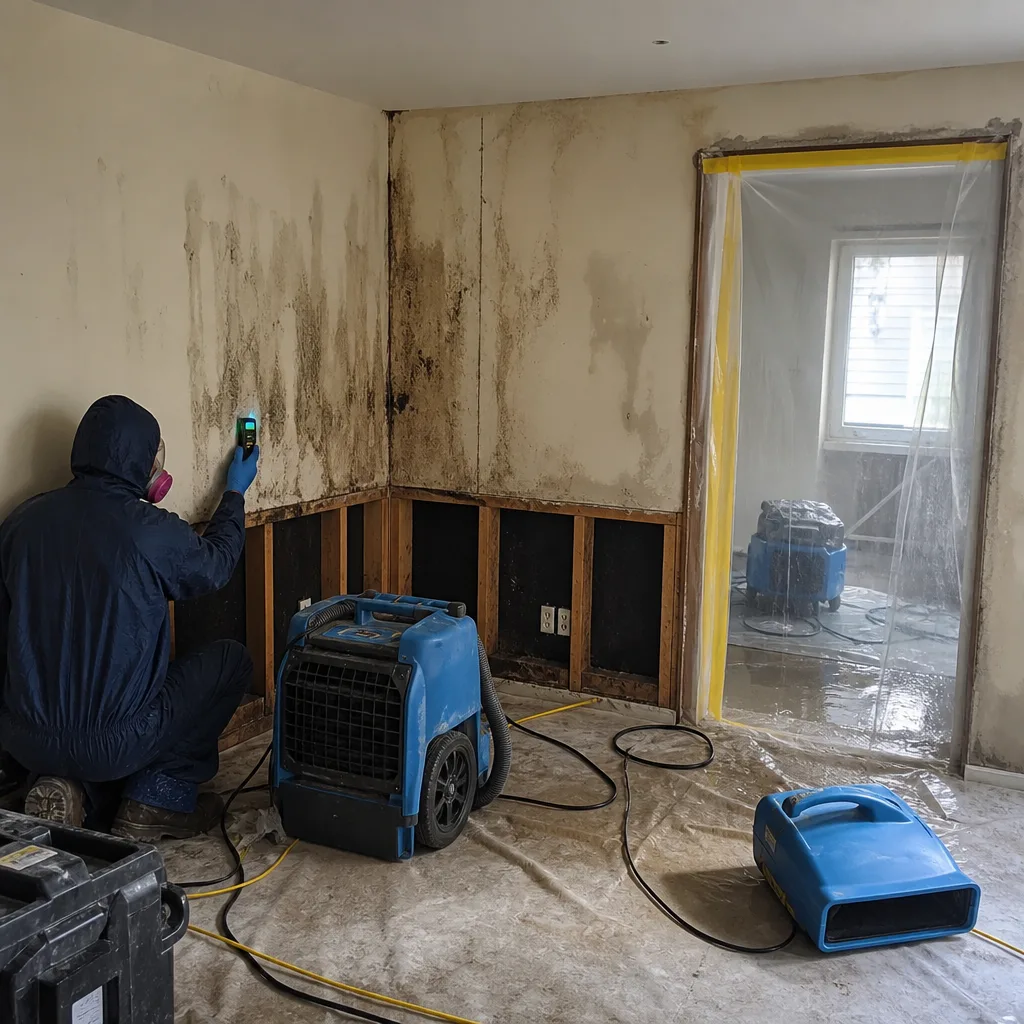 Before
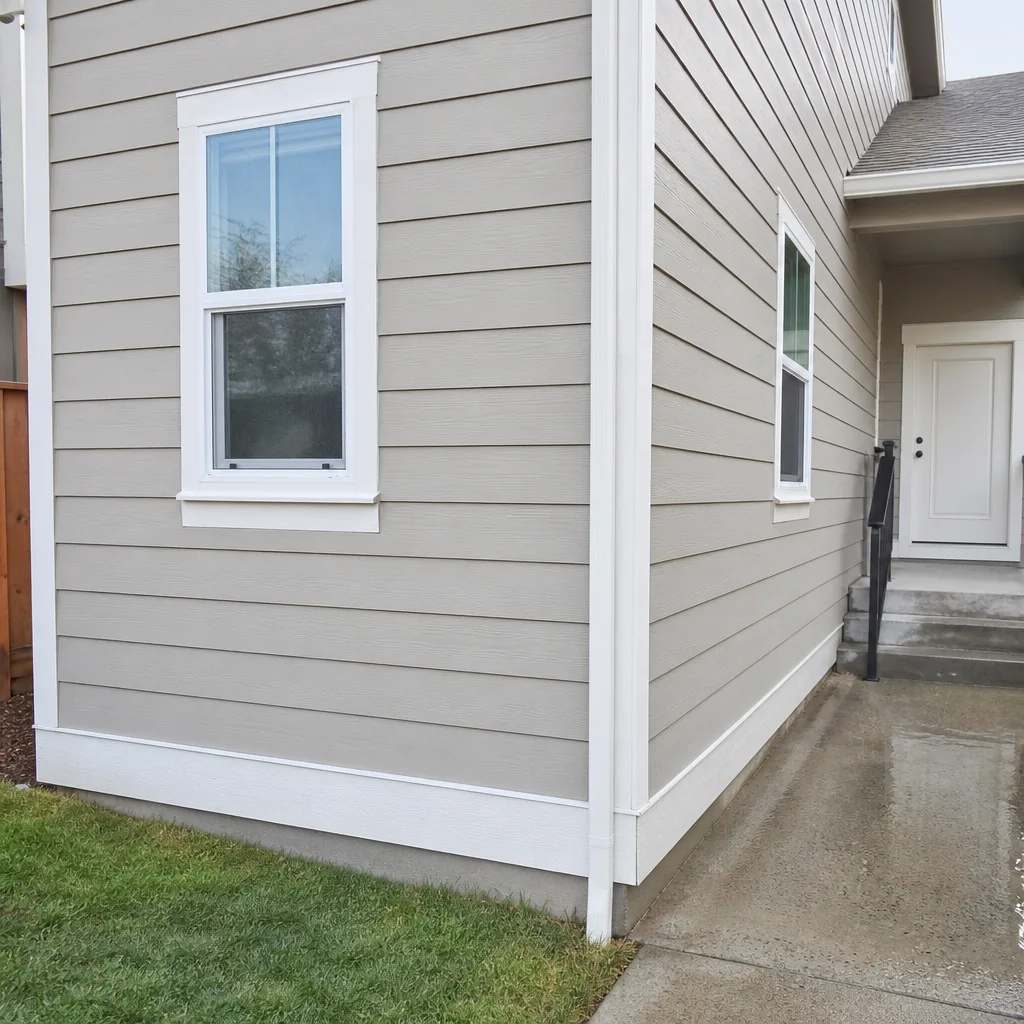 After
After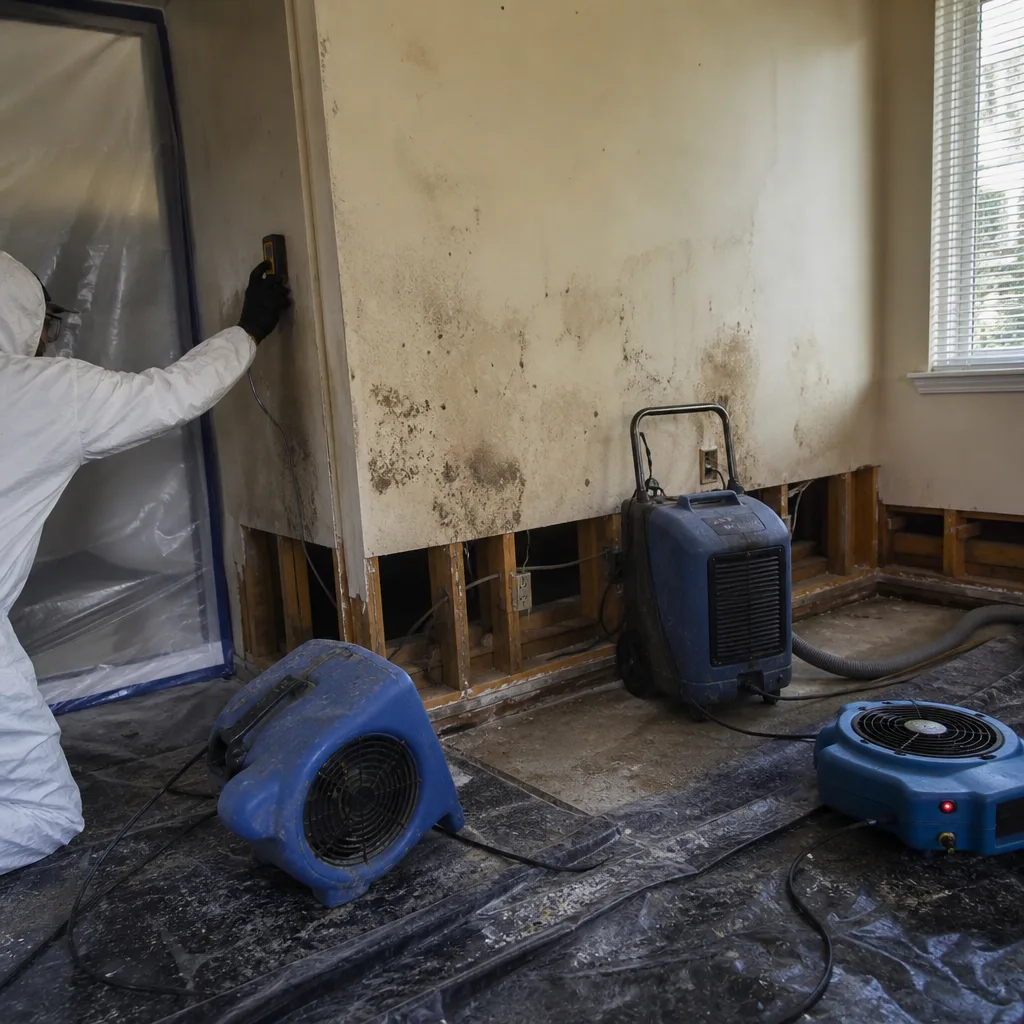 Before
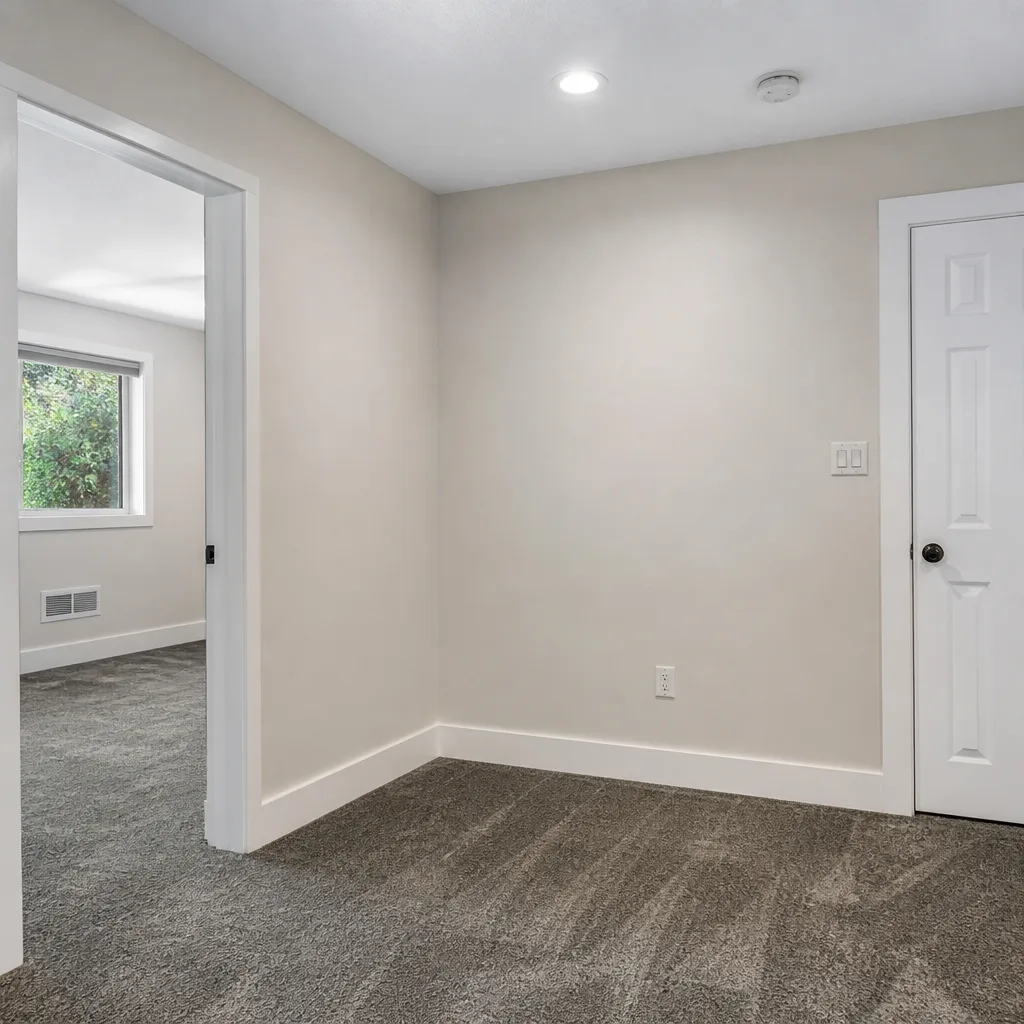 After
AfterDamage Restoration Warning Signs: A Federal Way Homeowner’s Reference Guide
A musty smell in a Federal Way crawl space means ambient humidity has likely been above 70% RH long enough for microbial activity to begin. By the time that odor reaches your nose, a moisture meter would already show readings your insurer will scrutinize closely, and the timeline for mold colonization has already started. Most warning sign guides describe what damage looks like after it’s advanced; this guide teaches you to read the early measurable signals that precede visible damage by weeks or months, and that a trained technician can verify on the first visit. For more guides & resources, see our blog.
Quick Answer
Homeowners in Federal Way should watch for wood moisture content above 19% in subfloor framing, drywall surface relative humidity above 85% at the wall cavity, and floor deflection exceeding 1/360 of the span. These measurable thresholds indicate water intrusion or vapor migration before mold becomes visible or structural damage occurs. A $30 infrared thermometer can distinguish condensation patterns from leak patterns, and documenting readings with photos before calling a contractor protects your claim.
Table of Contents
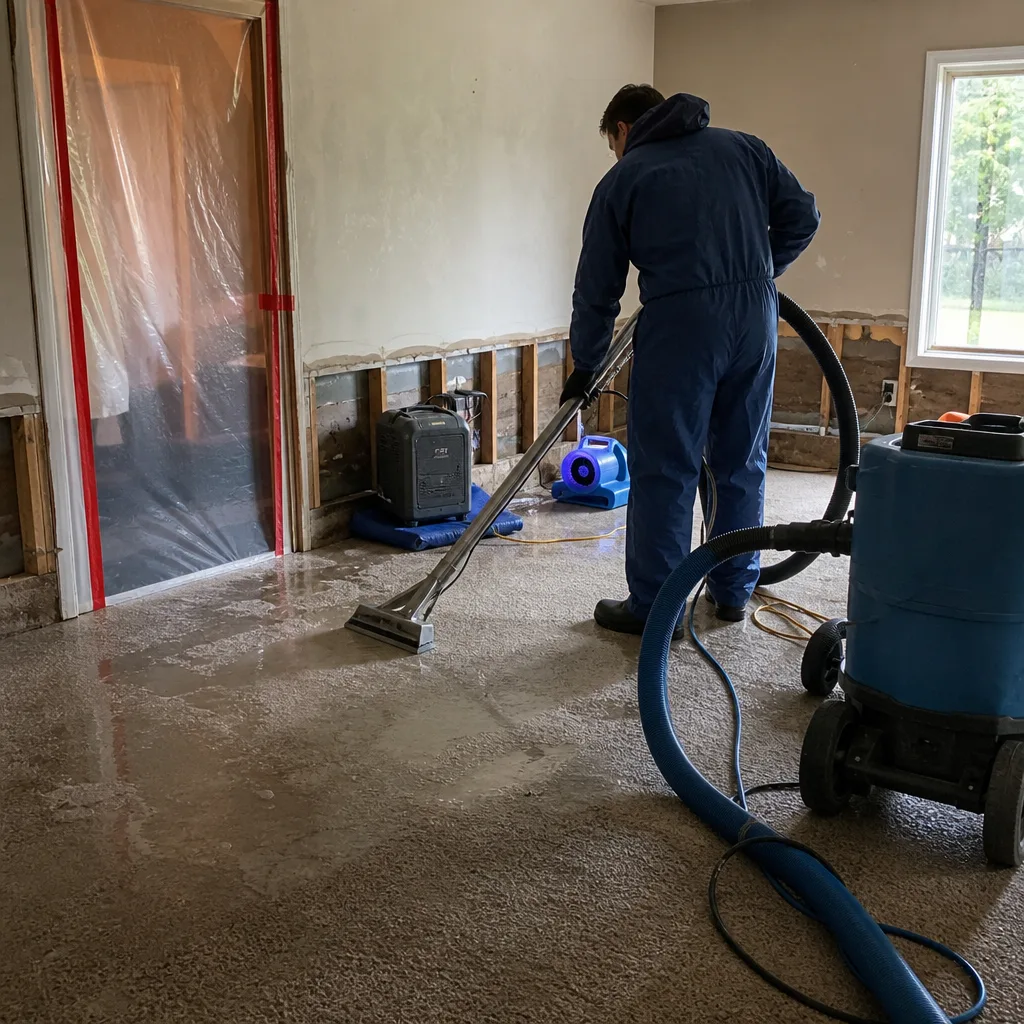
- The Measurable Thresholds That Matter
- Federal Way Construction Types and Their Vulnerabilities
- Condensation vs. Leak: A Homeowner’s Field Test
- How to Spot Incomplete Restoration Work
- What to Document Before You Call Anyone
- Room-by-Room Warning Sign Checklist
- Common Mistakes to Avoid
- When to Call a Professional
- Frequently Asked Questions
 Before
 After
AfterThe Measurable Thresholds That Matter
Visible mold, sagging drywall, and buckled floors are late-stage signals. The earlier indicators are numerical, and knowing them changes how you respond.
Wood moisture content above 19% in structural framing. At 19% MC, wood reaches the fiber saturation point where fungal decay organisms can metabolize cellulose. In Federal Way’s marine west coast climate, where annual precipitation averages 39 inches and relative humidity hovers between 70-85% for much of the year, untreated crawl space framing can sit at 16-18% MC for months without anyone noticing. The jump to 20% often happens after a single plumbing leak or foundation seepage event. We use pin-type moisture meters on every inspection, and we record the reading, the location, and the material species because insurers require all three to approve replacement.
Drywall surface relative humidity above 85% at the wall cavity. This requires a moisture meter with a deep-wall probe or a thermo-hygrometer inserted through a small access hole. Surface readings with a non-invasive meter can show 12-15% while the cavity behind reads 90% RH, especially in exterior walls with inadequate vapor barriers. At 85% RH sustained for 48-72 hours, mold spores germinate on organic surfaces. The water damage restoration process we document includes cavity readings taken at 24-inch intervals, recorded to IICRC S500 standards, because surface dryness means nothing if the cavity is still wet.
Floor deflection exceeding 1/360 of the span. For a 12-foot joist span, that’s 0.4 inches of sag. In pier-and-beam homes common in Federal Way’s older neighborhoods near the original downtown core, this often manifests as a “bouncy” feeling in kitchen floors or a visible dip running parallel to plumbing lines. Deflection at this threshold indicates either moisture-weakened joists, compromised support posts, or both. We measure with a laser level and record the deflection ratio in our written scope, because structural drying and sistering joists require different insurance coding than cosmetic floor repair.
Vapor pressure differential above 0.5 inches of mercury between crawl space and living space. This is the force that drives moisture upward through subflooring. We measure it with digital manometers during our initial assessment. A differential above 0.5″ Hg means moisture is migrating into the living space even if no liquid water is present, and it explains why some Federal Way homes smell musty in winter despite dry crawl space soil.
Federal Way Construction Types and Their Vulnerabilities
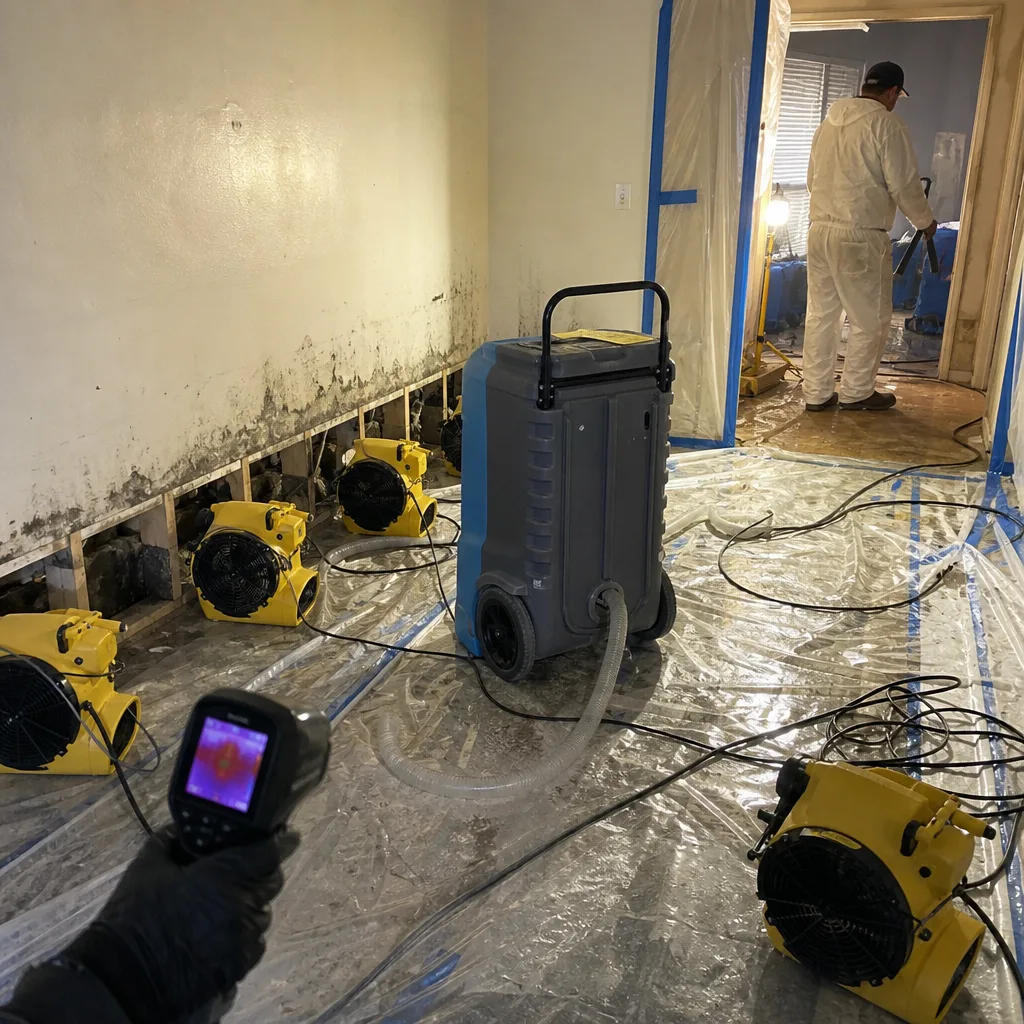
Federal Way’s housing stock spans six decades with distinct construction eras, each with predictable failure modes we’ve documented across thousands of inspections.
Pier-and-beam homes (pre-1975, concentrated near the original townsite and along Dash Point Road). These homes have ventilated crawl spaces with dirt or thin concrete rat slabs. In Federal Way’s clay-heavy soils, perimeter drainage fails gradually, and water wicks up support posts. The warning sign most homeowners miss: a slight tilt in floor-level door frames that no longer latch cleanly. We check post bases with a moisture meter and look for compression rings in the wood grain that indicate seasonal wet-dry cycling. The repair scope typically includes post replacement, vapor barrier installation, and sometimes subfloor drying with our Injectidry panel systems.
T1-11 siding homes (1975-1995, common in the Twin Lakes and Lakeland areas). This plywood siding product traps moisture at grade level where splash-back from Federal Way’s heavy winter rains saturates the bottom 12-18 inches. The warning sign: paint bubbling or peeling in a horizontal band 6-12 inches above ground level, often on the north and west exposures. Behind that paint, the OSB or plywood sheathing is typically reading 25-30% MC. We document the affected square footage, the siding exposure, and the sheathing condition with photos before removing anything, because insurance adjusters need to distinguish gradual deterioration from sudden damage.
1990s-era homes with composite roof shingles and step-flashing. Many Federal Way homes built during the 1990s construction boom used step-flashing at wall-roof intersections without kick-out diverters. In wind-driven rain common off Puget Sound, water runs behind the siding at these junctions. The warning sign: stained ceiling drywall in rooms below exterior walls, often mistaken for window leaks. We inspect with a borescope from the attic side and document the flashing condition with photos, because the repair scope may include both roofing and interior restoration.
Homes with conditioned crawl spaces (post-2005, increasingly common in newer developments near Celebration Park). These spaces should maintain 55-60% RH year-round. The warning sign: supply registers in the crawl space that are disconnected or blocked, causing humidity to rise. We check with a thermo-hygrometer and compare readings to the HVAC commissioning specifications. A conditioned crawl space at 75% RH indicates mechanical failure, not passive moisture, and the remediation scope includes HVAC repair coordination.
Condensation vs. Leak: A Homeowner’s Field Test
Not all moisture patterns indicate water intrusion. Misidentifying condensation as a leak leads to unnecessary demolition and claim complications. Here’s the field test we teach Federal Way homeowners to perform before calling anyone.
- Acquire a $30 infrared thermometer. Any hardware store in Federal Way carries them. Point-and-shoot models are sufficient.
- Scan the affected surface at 6:00 AM and 6:00 PM for three consecutive days. Record the temperature at the exact same spot each time. Condensation patterns correlate with outdoor temperature swings; leak patterns persist regardless of time of day.
- Calculate the temperature differential. Condensation occurs where surface temperature drops below the dew point. In Federal Way, January dew points average 38°F. If your interior wall surface reads 36°F at 6:00 AM and 52°F at 6:00 PM, you have a thermal bridge causing condensation, not a leak. A leak pattern shows a persistent cold spot, often 10-15°F below adjacent surfaces, at all times of day.
- Check for progressive expansion. Mark the stain perimeter with painter’s tape. Condensation stains stay within the same boundary; leak stains expand. Photograph the marked boundary with a date stamp.
- Verify with a moisture meter if uncertain. Condensation produces surface moisture only, typically 15-18% MC at 1/4 inch depth. Leaks saturate through the material, often exceeding 30% MC at the same depth.
The distinction matters for insurance purposes. Condensation is typically excluded as a maintenance issue; sudden and accidental leaks are covered perils. We document the pattern type in our written scope, with photos and meter readings, so the adjuster has evidence from day one.
Seasonal condensation in Federal Way is most common in March and April, when Pacific marine air brings high humidity while soil temperatures remain cold from winter. North-facing bedrooms above unconditioned garages are frequent sites. The solution is often improved air sealing and mechanical ventilation, not mold remediation, and we say so in our assessment even when it means a smaller job for us.
How to Spot Incomplete Restoration Work
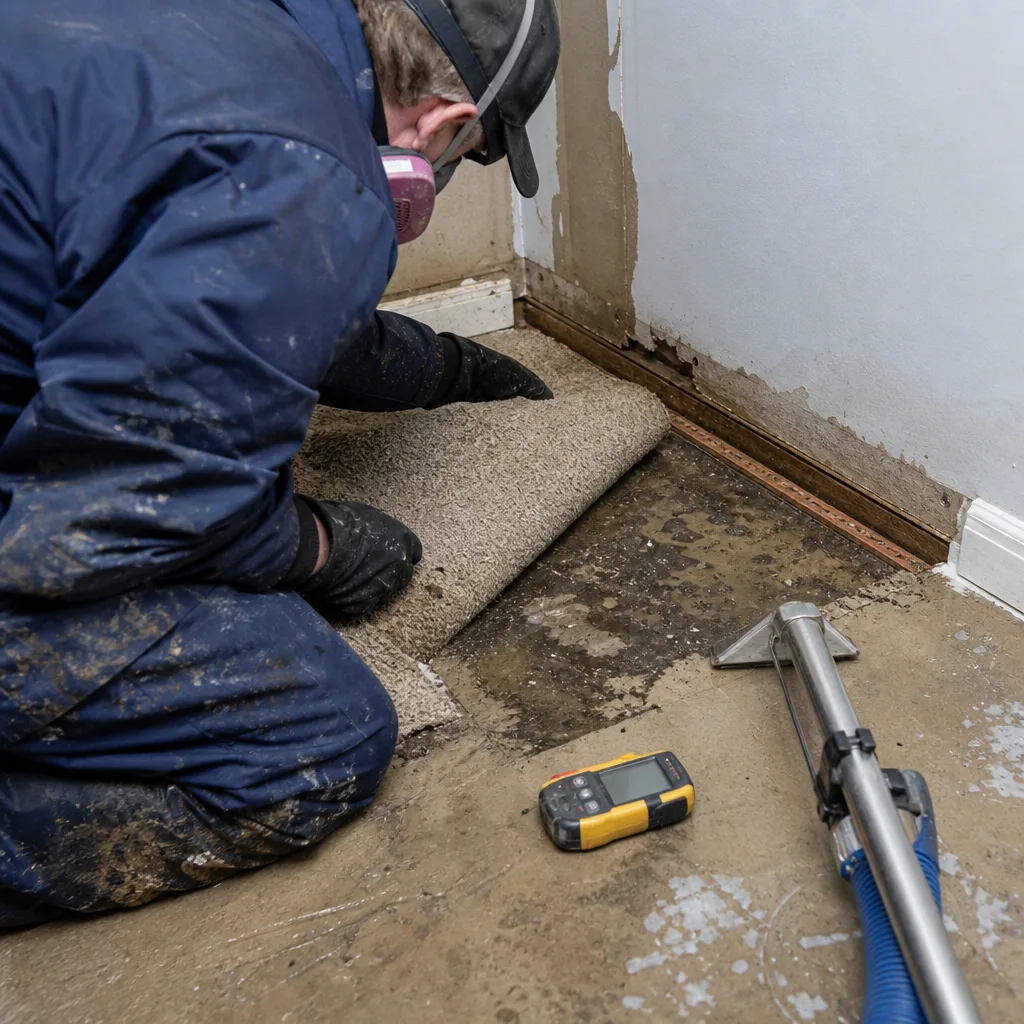
We are called to dozens of Federal Way homes each year where a previous contractor’s work failed within 90 days. The warning signs are specific, and homeowners who know them can demand correction before the warranty period expires.
Recurring musty odor after 90 days. A properly dried structure should smell neutral within 14-30 days, depending on material porosity. If the odor returns after 90 days, it typically means one of three failures: the original moisture source was not eliminated (common with plumbing leaks that were patched but not pressure-tested), the drying equipment was removed before reaching target moisture content (we see this when contractors bill by the day and homeowners pressure for pickup), or microbial growth was surface-treated but not removed from the cavity. Our DryMark Restoration Federal Way home assessments include cavity sampling with a borescope when we detect this pattern.
Paint peeling on previously repaired walls. Latex paint over damp drywall fails in a characteristic pattern: alligator cracking near the baseboard, progressing to full delamination. The drywall behind reads 18-20% MC, above the 15% threshold for paint adhesion. This indicates the wall was painted before drying completion, or the contractor used a moisture barrier primer to mask residual dampness rather than dry properly. We strip, dry, and repaint under our 365-Day Done Right Promise, with moisture logs showing compliance before any primer touches the surface.
New floor cupping in a previously dried area. Cupping, where board edges rise above the center, indicates moisture imbalance between the top and bottom of the flooring. In a properly dried subfloor, moisture content should be within 2% between top and bottom. Cupping that appears months after restoration means either the subfloor was not dried to depth (common with contractors who rely on surface fans without dehumidification), or a vapor barrier was omitted during repair. We measure with a Wagner Orion meter at multiple depths and document the gradient; remediation may require floor removal and subfloor drying with our Phoenix 200 HT dehumidifiers and Dri-Eaz air movers.
Corrosion on new fasteners or hardware. Galvanized nails or screws that show rust within six months indicate sustained humidity above 80% RH in the cavity. We photograph this as evidence of incomplete drying and include it in our scope documentation for insurance review.
What to Document Before You Call Anyone
The documentation you create in the first hour often determines whether your claim is paid without dispute. Insurers deny claims when the damage timeline is unclear, and contractors’ scopes are challenged when pre-existing conditions are undocumented. Here’s what to capture.
- Wide-angle photos of the affected room, showing all four walls, the ceiling, and the floor. Include a dated newspaper or phone screenshot for timestamp verification.
- Close-up photos of the specific warning sign: the stain, the crack, the bubbling paint, the warped board. Use a ruler or coin for scale.
- Photos of the probable source area: the ceiling above a floor stain, the wall behind a baseboard, the exterior grade near a foundation crack.
- Written notes with dates and times: when you first noticed the sign, any weather events in the preceding 72 hours, any plumbing use patterns, any previous repairs in that area.
- If you have a moisture meter or infrared thermometer, record the readings and the exact measurement locations. A photo of the meter display with the wall in background is ideal.
- Photos of your HVAC filter, thermostat setting, and any visible ductwork in the affected area. These establish ventilation conditions that affect drying protocols.
This documentation serves three purposes. It establishes the sudden vs. gradual timeline that determines coverage. It prevents contractors from attributing pre-existing wear to new damage. And it gives us, when you call Fire & Smoke Damage Restoration in Federal Way or any of our services, a baseline to compare against our own readings, so our written scope is defensible to your adjuster.
We have seen Federal Way homeowners lose $8,000-15,000 in covered repairs because they cleaned up visible water before photographing the source. The water you wipe up is evidence. Document first, then mitigate.
Room-by-Room Warning Sign Checklist
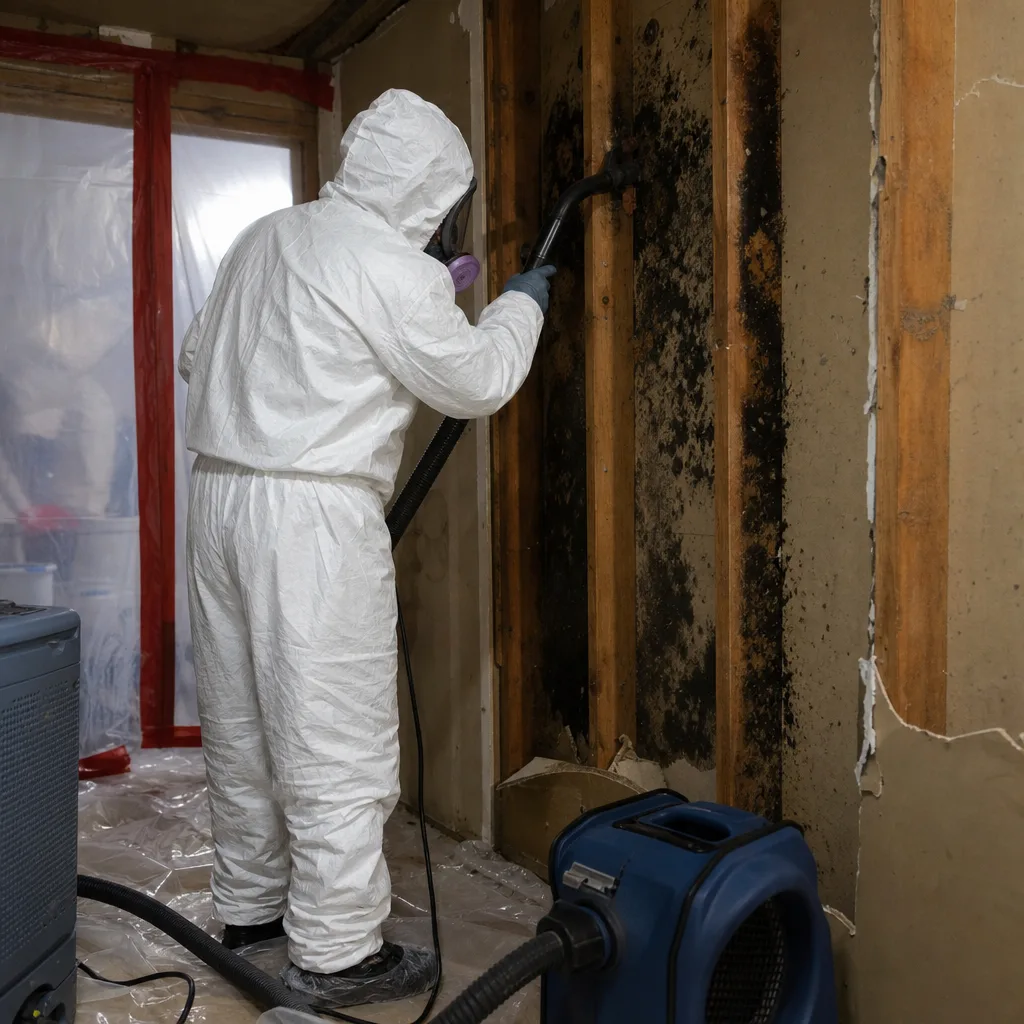
Crawl Space and Basement
The crawl space is where most Federal Way water damage begins, and where it’s least likely to be detected early.
- White or gray fuzzy growth on joist surfaces (efflorescence on masonry is different; photograph both for comparison)
- Soil that remains dark 48 hours after rain, indicating poor drainage or a plumbing leak
- Insulation that has fallen from between joists, saturated with condensation
- Metal ductwork with corrosion spots, especially at seams
- A temperature drop of more than 5°F at the crawl space access compared to the living space, indicating excessive air exchange
Kitchen and Bathrooms
- Grout that remains dark after 24 hours of non-use, indicating saturation behind the tile
- Cabinet base panels that swell or delaminate, especially under sinks and dishwashers
- Toilet flange movement detected by rocking the bowl; even slight movement breaks the wax seal
- Exhaust fans that fail to hold a tissue against the grille when running, indicating blocked ductwork and trapped moisture
- Floor tile that sounds hollow when tapped with a coin, indicating failed thinset from moisture or deflection
Bedrooms and Living Areas
- Wall outlets or switches that feel cool to the touch, indicating insulation gaps where moist air condenses
- Window sills with peeling paint on the interior side, not the exterior; this is condensation, not weather exposure
- Crown molding that separates from the ceiling in a wave pattern, indicating truss uplift from attic moisture or seasonal movement from inadequate moisture control
- Carpet that feels damp in the morning but dry by afternoon, indicating a slab with failed vapor barrier
Attic
- Nail shanks visible through roof sheathing that show rust, indicating chronic humidity above 80% RH
- Insulation compressed into a “path” leading from the access hatch, indicating air leakage that carries moisture
- Dark streaking on the underside of roof sheathing that follows the rafter pattern, indicating inadequate soffit ventilation
- Light visible through the ridge vent from inside, but no airflow felt; blocked ridge vents are common in Federal Way after wind-driven rain deposits debris
Common Mistakes to Avoid
- Waiting for visible mold before acting. Mold becomes visible at roughly 10 square feet of colonization. By then, the moisture problem has typically persisted for 2-4 weeks, and the remediation scope includes removal of finished materials that early intervention would have preserved.
- Using bleach on porous materials. Bleach kills surface mold but adds moisture to the material and can feed deeper growth. It also destroys the lignin in wood, making it more susceptible to future colonization. We see this mistake most often in Federal Way’s older rentals where landlords attempt self-remediation.
- Running a dehumidifier without addressing the source. A residential dehumidifier in a crawl space with an active plumbing leak simply runs continuously, consuming electricity while the water continues. The warning sign is a dehumidifier tank that fills every 6-8 hours indefinitely.
- Accepting a verbal scope or estimate. Haven Standard, Clause 1 requires a written price before work begins for a reason. Verbal estimates are unenforceable and create disputes when additional charges appear. We provide a written scope with line-item pricing, and we encourage homeowners to obtain our Free Second Opinion on any competitor’s written estimate.
- Neglecting to document pre-existing conditions. Federal Way’s home sales have been active, and many restoration calls come from new owners discovering issues the seller concealed. Without move-in documentation, proving the damage predated ownership is difficult.
- Assuming insurance covers all restoration scenarios. Gradual damage, maintenance-related failure, and flood water (as distinct from sudden water damage) carry different coverage rules. We review your policy language and document the sudden vs. gradual timeline before work begins, so there are no coverage surprises.
- Hiring based on speed of arrival alone. Emergency water extraction should begin quickly, but the drying protocol and documentation matter more for your final claim. A contractor who arrives in 30 minutes with inadequate moisture mapping equipment will miss saturated cavities that a slower-arriving competitor with proper tools would catch.
When to Call a Professional
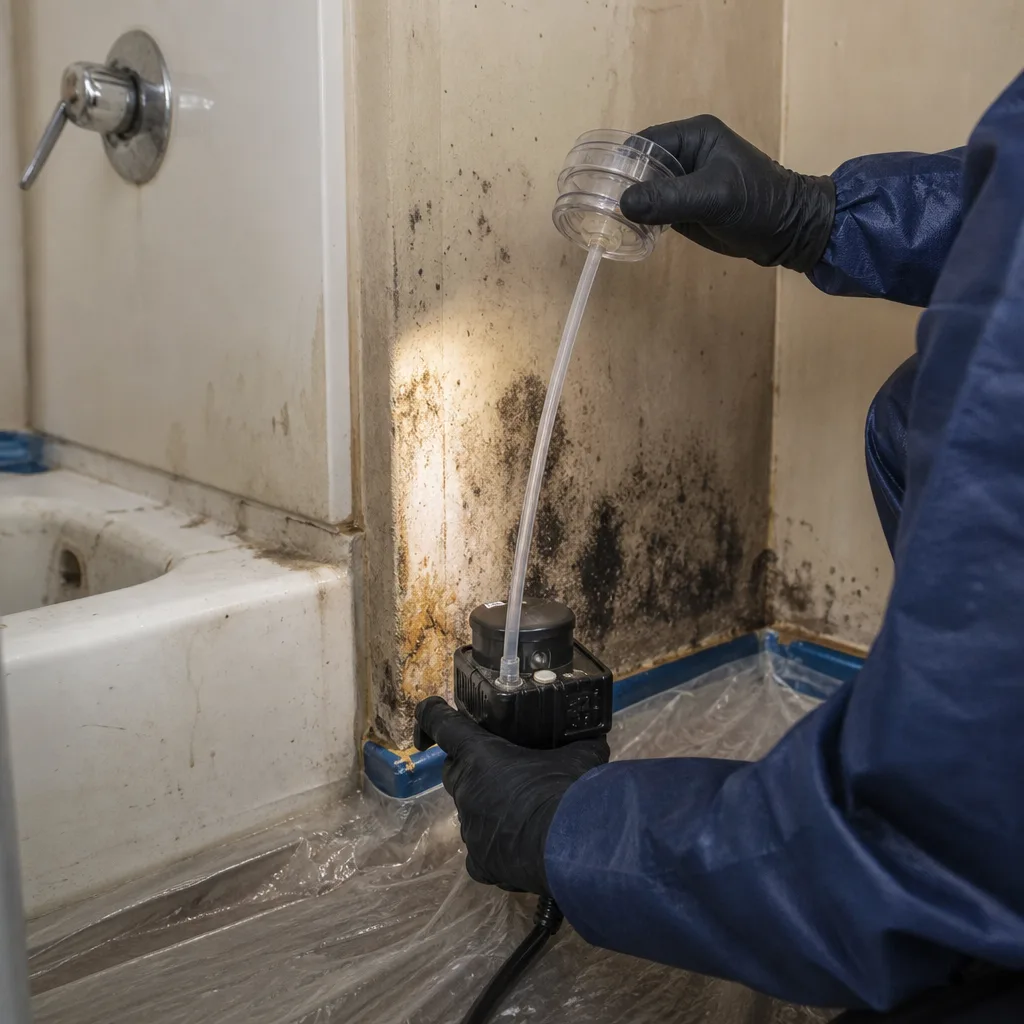
Call a certified restoration contractor when: moisture meter readings exceed 19% in structural wood, you detect musty odors that persist beyond 48 hours after ventilation, you observe staining that expands over a week of monitoring, or you find warning signs of incomplete previous restoration. Do not attempt to open wall cavities or access contaminated crawl spaces without proper PPE and containment; disturbed mold releases spores at concentrations that affect respiratory health. Read our DIY vs Professional Damage Restoration: The Federal Way Homeowner’s Decision Guide to understand when professional help is essential.
DryMark Restoration Federal Way offers free estimates in Federal Way. Our assessments include written moisture readings, photo documentation, and a scope with line-item pricing before any work begins. Call (253) 322-4873 to schedule. Live phone coverage is available 24 hours a day, 7 days a week with no voicemail on emergency lines.
Frequently Asked Questions
Reputable restoration contractors in Federal Way typically provide initial moisture assessments at no charge, with the understanding that you’ll receive a written scope and can decline work without obligation. At DryMark Restoration Federal Way, our assessments include pin and non-invasive moisture readings, thermal imaging, and a documented photo record, all provided with a written price before any work starts under Haven Standard, Clause 1. Call (253) 322-4873 for an exact quote on your situation.
Most policies cover sudden and accidental damage but exclude gradual deterioration. The critical factor is whether you can document when the damage began and that you acted promptly upon discovery. Your own documentation, photos with timestamps, and moisture readings strengthen your position. We review your policy language during our assessment and coordinate directly with adjusters to establish the damage timeline. Call (253) 322-4873 if you’re uncertain about coverage.
Emergency water mitigation should begin within hours to prevent secondary damage, and DryMark Restoration Federal Way maintains live phone coverage 24 hours a day, 7 days a week with no voicemail on emergency lines. However, reconstruction and non-emergency assessment work is scheduled and scoped in writing like any professional trade, with a specific start date agreed in advance. Speed language belongs to mitigation; quality work requires planning. Call (253) 322-4873 to discuss your timeline.
Visible growth exceeding 10 square feet, growth inside HVAC systems, or growth resulting from sewage contamination requires professional remediation under IICRC S520 standards. Surface cleaning of small, isolated patches on non-porous materials may be appropriate for DIY, but only after the moisture source is eliminated and verified with meter readings. We provide a Free Second Opinion on any competitor’s remediation scope if you’re uncertain about the extent. Call (253) 322-4873 to schedule.
Federal Way’s specific vulnerabilities include clay-heavy soils that retain water against foundations, a high proportion of pier-and-beam construction in older neighborhoods, and T1-11 siding common in 1970s-1990s builds that traps moisture at grade. The city’s position between Puget Sound and the Green River valley also creates localized humidity pockets that differ from hilltop neighborhoods in nearby cities. Our assessments account for these Federal Way-specific factors in our drying protocols and equipment selection.
Request the drying logs, which should show daily moisture readings at defined locations, target moisture content for each material, and equipment placement diagrams. Incomplete documentation is itself a warning sign. We review competitor documentation at no charge as part of our Free Second Opinion service, and we can verify current conditions with our own moisture mapping. Call (253) 322-4873 if you suspect incomplete previous work.
The Bottom Line
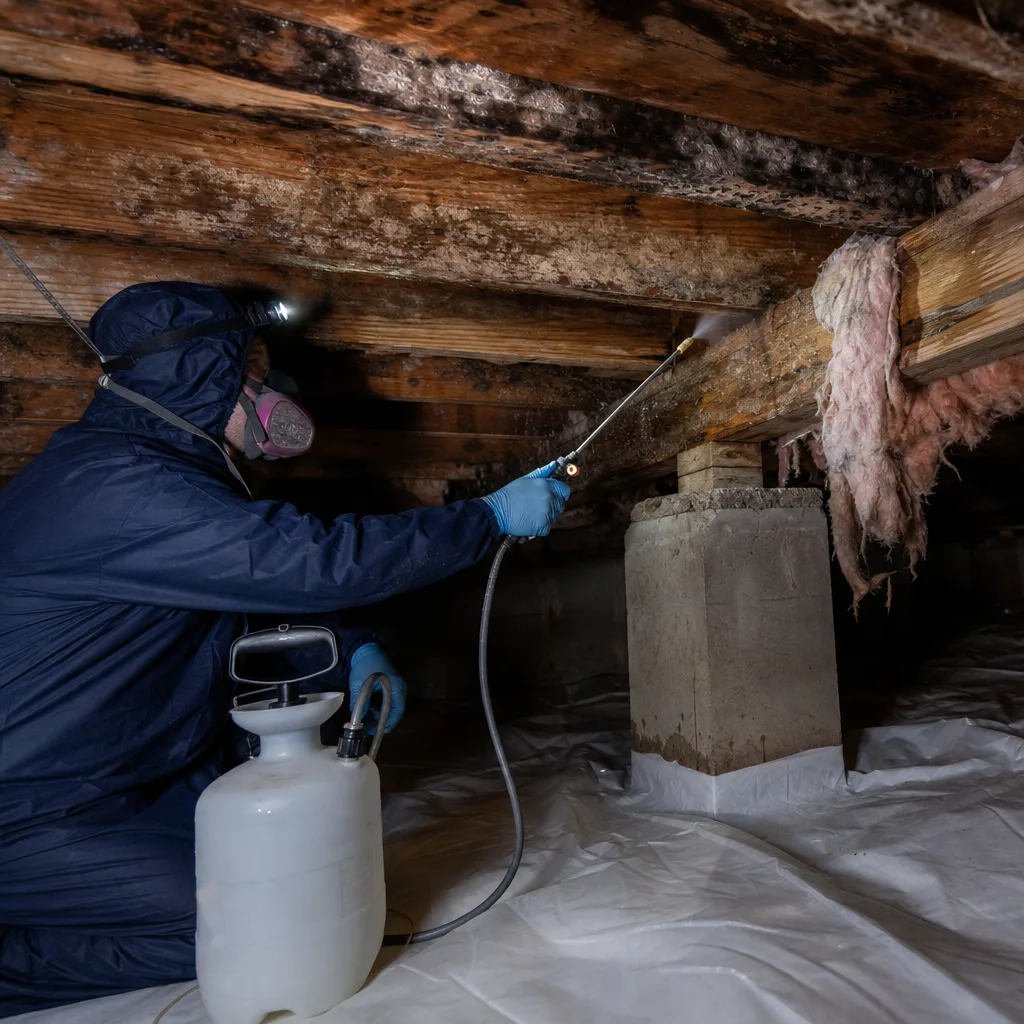
Water damage in Federal Way rarely announces itself with a dramatic flood. It accumulates in measurable increments: a crawl space humidity reading that climbs from 65% to 78% over a wet winter, a subfloor moisture content that crosses 19% after a slow plumbing leak, a thermal pattern that shifts from seasonal to persistent. The homeowners who fare best are those who learn these thresholds, document what they find, and demand written evidence from any contractor they hire. The cost of early detection is a $30 thermometer and an hour of observation. The cost of delayed response is often structural repair, disputed claims, and months of remediation.
Written by Alicia Brennan, Owner at DryMark Restoration Federal Way, serving Federal Way since 2011.